
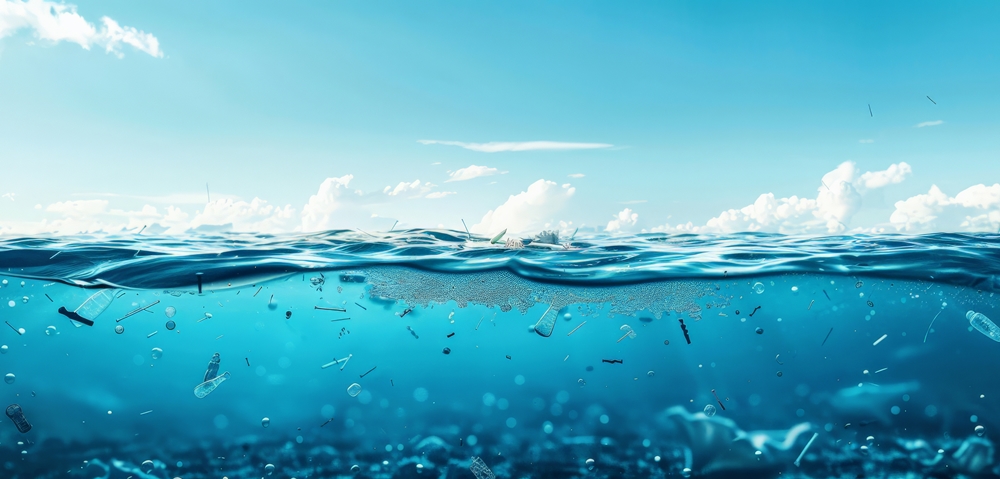
Microplastics are seen today as the main problem with plastics. They are tiny pieces of plastic, which are being found on land, in the sea, and now even in the air we breathe and the water we drink.
Some of the microplastics are coming from tyres and man-made fibres, and recycling can also be a source of microplastics, but most of the microplastics found in the environment are caused by the fragmentation of ordinary plastic and there is a solution to this available today.
Michael Laurier, CEO of Symphony Environmental Technologies Plc, said “We knew that our d2w oxo-biodegradable technology could prevent microplastics by converting the plastic into biodegradable materials, but we wanted to be quite sure, so we asked experts at Lambton Manufacturing Innovation Centre in Canada to investigate. They reported on 25th September 2024 that “oxo-degradable plastics (ie ordinary plastics) create microplastics, but oxo-biodegradable plastics do not.”
The Report continued: “Oxo-biodegradable plastics are both bioplastics and biodegradable plastics. They consist of a conventional plastic containing a masterbatch. The masterbatch causes the molecular chains to be dismantled by oxidation so that the material is no longer a plastic and becomes biodegradable. Light and heat will accelerate the process, but it will continue even in dark, cold, conditions. Moisture is not necessary for oxidation and does not prevent it.”
“Ordinary plastic and oxo-biodegradable plastic lose their strength and fall apart at about the same time when exposed to sunlight, but the fragments of ordinary plastic have a molecular weight which is much too high for biodegradation.”
“In summary it is clear that if plastic products are made with an oxo-biodegradable masterbatch and get into the open environment intentionally or by accident, the molecular-weight of the plastic will reduce much more quickly and it will become a waxy substance which is no longer a plastic. It will then have become a source of nutrition for naturally occurring micro-organisms.”
“The European Chemicals Agency (ECHA) were asked to study this type of plastic in December 2017. They made a Call for Evidence, and they advised after 10 months that they were not convinced that it creates microplastics. We agree with them and have seen no evidence that microplastics from this type of plastic have ever been found in the environment.”
Laurier commented: “The problem is that although ordinary plastics are fragmenting, they persist in the environment, getting smaller and smaller until they are small enough to get into our bodies. This persistent particulate litter takes decades to degrade sufficiently to permit biodegradation. This is why d2w biodegradable plastic was invented.
The prodegradant catalyst in the d2w masterbatch not only accelerates oxidative degradation, but also – critically – removes the dependence of this process on sunlight so that, unlike conventional plastics or photo-degradable plastics, degradation will continue in darkness – even if buried – until biodegradability is achieved.
Biodegradable plastic was patented fifty years ago by the scientists who had themselves created plastics and who realised that the durability which they had achieved could actually be a problem. If their invention had been widely adopted there would be no ocean garbage patches today, but instead the plastics industry chose to continue to make conventional plastic products, which started to accumulate in the oceans and has now become a serious problem. Nevertheless, it is not too late – If the invention is widely adopted today the accumulation of plastic in the oceans will be reduced and eventually reversed.
No government in the western world has a policy for dealing with plastic waste which has escaped into the open environment and cannot therefore fit into a circular economy. Their blind spot is that despite their best efforts a significant amount of plastic will continue to get into the open environment for the foreseeable future, which cannot be collected for recycling or anything else. It can however be recycled if collected during its useful life.
D2w biodegradable technology is specifically designed to deal with this problem, and it is compulsory in the UAE, Saudi Arabia, Jordan, Bahrain, and now Yemen. It will degrade in landfill if oxygen is present and will then biodegrade, but if it has been sent to landfill it has been responsibly disposed of and is no longer a problem. The composting Standards (ASTM D6400 and EN13432) are not relevant to biodegradation in the open environment.
The plastics industry could have addressed this environmental problem, to the great benefit of themselves and the environment, by making everyday plastic products with biodegradable technology so that they would become biodegradable much more quickly and would be recycled back into nature by bacteria and fungi. However, instead of engaging with the experts in the biodegradable plastics industry and seeking to understand it better and to explain it to their customers and to the public they have continued to make conventional plastic and have represented to the public that recycling will solve the problem. They are now being prosecuted for this by the Attorney-General of California.
It must be obvious that recycling cannot deal with the plastic which escapes into the open environment from which it cannot be collected. Nor can the type of plastic marketed as compostable deal with the problem, for it has to be collected and taken for composting.”