

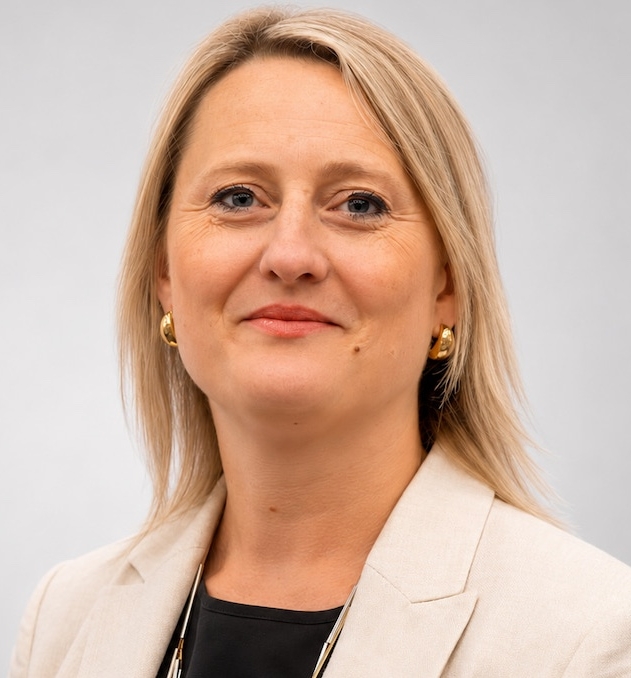
Katherine Chapman, new chief executive officer at Investors in People, looks at how low trust can create a hidden productivity drain inside growing businesses, with employees spending time and energy covering themselves, delaying difficult conversations or holding back concerns until issues have become harder to solve.
A customer problem has been rumbling on for a few days. One person spotted the risk early, another didn’t raise it and a manager is left piecing together what happened from a trail of cautious emails. By the time the issue reaches the owner or senior team the customer is frustrated and people are more guarded.
Sounds familiar? In many businesses this scenario would be dismissed as one of those things that happens when people are busy. But the cost is spread across the day: the extra email written as a safety net, the conversation that happens too late and the decision held back while someone weighs up how exposed they will be if they get it wrong.
This is where trust becomes a productivity issue: as friction in the way we work moves through the business.
At Investors in People we work with organisations of many different sizes and sectors and one of the things we see repeatedly is that everyday behaviour gives leaders valuable evidence about how trust is being experienced.
It appears in whether it feels safe to say, early enough, that something is going wrong. It also appears in whether employees trust their manager to respond fairly and whether they feel genuinely authorised to use their judgement without being left exposed.
Our latest research, The Trust Paradox, suggests that many employees are operating with a degree of caution that should worry leaders. Some 61% of employees say they regularly “cover themselves” at work at least occasionally, for example by keeping emails or screenshots, while 65% have avoided raising or speaking openly about something at work in the past six months.
For an SME leader trying to improve performance the pattern matters. When self-protection becomes routine then extra checking, delayed escalation and lost information become part of the operating model.
The productivity drag rarely looks like people giving up. Rather, it looks like good people becoming careful. They still care about the work and the customer but spend more time judging whether it is safe to act, raise a concern or admit that the workload is becoming unmanageable.
There is a wellbeing cost too. Workload and burnout were the issues employees most commonly said they had avoided raising openly. The survey does not tell us why they stayed silent. But when workload pressure is not raised as an issue leaders cannot reset priorities, redistribute work or address under-resourcing, inefficient processes and unrealistic deadlines. The employee continues carrying the strain while the business continues operating without information it needs. This is not good for people or for the business.
Talking about burnout can feel like exposing a personal weakness rather than reporting an operational risk. Employees are judging whether it is safe to speak and whether their manager will respond fairly and take the concern seriously. Wellbeing policies and support have limited reach if people do not feel able to say that the work itself is becoming unsustainable.
You can see the same dynamic in the way a message changes as it moves through the business. A manager begins with a serious concern, then softens it because they are unsure how challenge will be received. By the time it reaches the senior team the warning is technically there but the urgency has disappeared. The business has lost the full picture.
SMEs feel this quickly. Growing businesses depend on people being close enough to the work to spot problems and confident enough to act. Roles are rarely perfectly contained, which is often a strength, but blurred boundaries can also hide overload. Responsiveness depends on clear authority and confidence that reasonable judgement, and an honest warning about pressure, will be taken seriously.
Self-protection can also be mistaken for diligence. More people are copied into emails, managers ask for reassurance on decisions they can make themselves and senior leaders see activity everywhere. Underneath it people have learnt to protect their position before moving the work forward.
The instinct is often to add more control. More reporting, sign-off and tighter performance management may feel like the practical response, especially in a business that is scaling.
But if the underlying problem is lack of trust and uncertainty about accountability then more control adds more friction. Each additional approval teaches people that the safest course is to wait until somebody else carries the risk.
Where SME leaders should start
Start by looking at where work slows, where information becomes softened, where decisions climb higher than they need to and where people seek unnecessary cover.
Look first at decisions that feel harder than they should. Every business has moments where a reasonable judgement becomes a long chain of reassurance. Sometimes it’s a process issue. But it can reveal unclear decision rights or a belief that making the wrong call carries more personal risk than waiting.
Silence is worth watching as well. In a busy SME a quiet team can look like a settled team but when concerns emerge after the meeting rather than during it, or bad news reaches leaders only after the options have narrowed, then the business has lost the chance to act early and disengagement can become even more embedded.
The first reaction to a problem matters. When someone raises a concern or admits something has gone wrong everyone notices the response. It tells people whether speaking honestly is safe and whether the manager will handle difficult information fairly.
Line managers need particular support because they carry much of the daily employee experience. When asked what they would do first if something went wrong at work 37% of employees in our research said they would speak to their manager. However, one in five said trust in their organisation depended heavily on who their manager was, and the same proportion had avoided speaking up about concerns over manager behaviour.
In many SMEs employees judge the organisation through the person they report to. A manager who is clear about expectations and fair makes it easier for people to raise issues. A manager who reacts unpredictably makes self-protection a rational response, even when that was never their intention.
The final test is whether work moves with enough judgement and useful challenge.
- Do problems surface while they can still be solved easily?
- Are decisions made at the right level?
- Do concerns reach leaders without being stripped of their urgency?
- Can employees say when workload is becoming unsustainable?
- Do people believe mistakes and difficult information will be handled fairly?
These behaviours do not diagnose trust on their own but they tell leaders where to look. They also expose where the business is losing time, information and decision-making capacity.
For SME leaders these are practical business questions. They reveal whether people are directing their energy towards customers, improvement and growth or towards protecting themselves inside the organisation. For people it can mean being seen, heard and valued at work, which underpin wellbeing and engagement.
This is where trust stops being an abstract culture issue and becomes part of the operating conditions for productivity.