
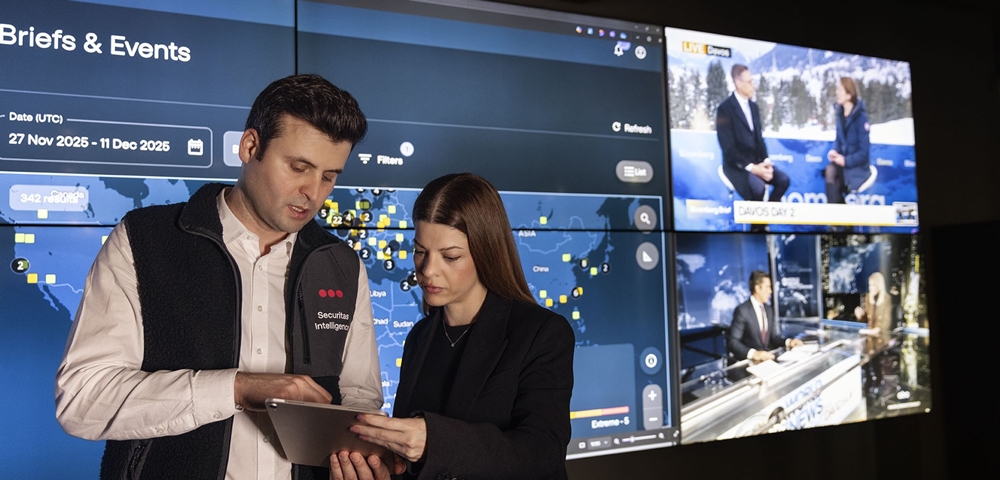
Global instability is increasingly translating into local disruption for UK businesses, as security intelligence from Securitas shows risks once considered distant are now shaping day‑to‑day operations.
Geopolitical tension, activist pressure, economic uncertainty and shifting public sentiment are converging in ways that are directly impacting sites, supply chains and workforces – often without clear triggers or immediate warning. Organisations are increasingly seeking strategic partners that can help them understand these evolving risks and translate insight into practical action.
Analysis from Securitas’ Risk Intelligence indicates this shift has accelerated over the past year, with global developments now influencing operational risk at a pace many organisations are not set up to manage. As a strategic safety and security partner, Securitas is helping organisations connect global developments with local operational decision-making, strengthening resilience across people, assets and operations.
“Global risk is no longer something organisations monitor from afar – it’s something they experience operationally,” said Mike Evans, Director of Securitas’ Risk Intelligence. “Events happening globally are translating much faster into local impact, and they’re rarely contained to one type of risk. They show up simultaneously across sites, people and supply chains.”
What makes this shift challenging is not just that global threats are increasing, but how they are now translating into disruption through indirect, overlapping pathways.
In practice, this can mean:
- geopolitical tension triggering activist campaigns against specific organisations or sectors
- global supply‑chain instability creating operational pressure across logistics and manufacturing environments
- online narratives and public discourse influencing workforce sentiment and internal risk
- hostile activity being carried out through proxies, intermediaries or low‑level reconnaissance at site level
Individually, these developments may not appear connected. But together, they create sustained pressure that builds toward disruption, often without a single defining incident.
This convergence reflects a broader trend identified in Securitas’ 2026 Annual Intelligence Estimate: as global dynamics diverge, risks are increasingly merging at the organisational level, cutting across physical, digital, operational and reputational domains.
For many businesses, this is exposing a gap between strategic awareness and practical action. While global developments are often monitored at leadership level, they are not always translated into clear, site‑level decisions.
“Security and risk can no longer sit separately from operations,” Mike added. “They need to bridge the gap between global insight and frontline decisions, helping organisations build resilience and make informed operational choices.”
The organisations adapting most effectively are those moving away from siloed security models and toward integrated, intelligence‑led approaches delivered through trusted partnerships. This means combining:
- on‑site guarding with risk intelligence and continuous monitoring
- global threat insight with local context and operational awareness
- strategic analysis with frontline decision‑making
When officers and teams are briefed with relevant context, they are better able to:
- identify weak signals of emerging risk
- recognise when external pressure may translate into operational impact
- intervene early, before issues escalate into disruption
Without that connection, even well‑resourced security models remain inherently reactive, Mike warns.
“For business owners and directors, the implications are significant,” he concludes. “As global instability continues to intersect with local operations, organisations that treat security as a cost centre or response function are finding themselves increasingly exposed. Those that position security and risk as a strategic enabler of business continuity are better equipped to operate with confidence in uncertain environments, make informed, proportionate decisions, and protect people, operations and reputation without unnecessary disruption.”