
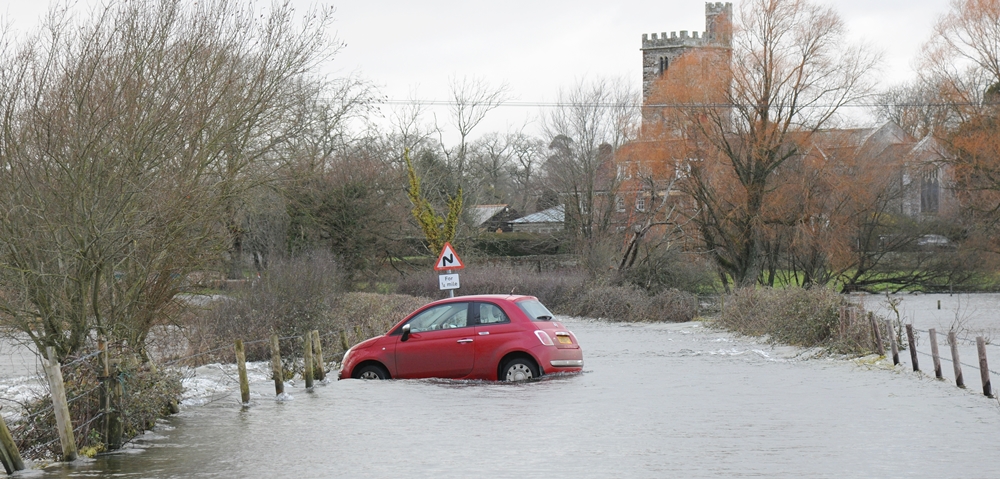
Flooding events bring misery to communities: and it appears to be getting worse. Records are being broken with Storm Babet, in October 2023, causing some rivers in Derbyshire and Nottinghamshire to break their banks to exceed their highest levels yet, and a record number of flood alerts were issued in the first quarter of 2024 across England. At the end of November, Storm Bert flooded in excess of 100 homes and, Storm Darragh triggered over 200 flood warnings and flood alerts across England.
To get to the root of the issue and identify how to boost England’s flood resilience, the Environmental Audit Committee (EAC) has launched an inquiry. With the effects of man-made climate change making flooding events more likely, MPs are hoping to understand how authorities are tackling flooding events, what measures are needed to future proof against flooding and what support is needed by householders and businesses to boost their own resilience.
EAC will be examining the strengths of nature-based solutions versus hard infrastructure as resilience assets, whether current metrics for monitoring flooding events before they happen are working effectively, and what the Flood Resilience Taskforce should prioritise.
Environmental Audit Committee Chair, Toby Perkins MP, said: “Flooding causes anger, frustration and misery for too many communities, with people asking time and again why the same places continue to be hit. Homes, businesses, public transport, infrastructure: all are at the mercy of flooding exacerbated by climate change.
“Our Committee is determined to get to the bottom of whether enough is being done to build our nation’s flood resilience. We’re committed to examining how we can boost flood defences and to uncover if flood management authorities are working effectively together.”
Environmental Audit Committee members, Julia Buckley MP and Cameron Thomas MP, said:
“In our constituencies of Shrewsbury and Tewkesbury, the threat of flooding is a year-long concern. In recent weeks, both Storm Bert and Storm Darragh have brought flooding into the national consciousness, though our own constituents live with the prospect of flooding throughout the year, and regularly suffer its devastating impacts. This recurring issue threatens livelihoods, destroys belongings and leaves families in despair. As policymakers, we must do all we can to ensure flood management structures are fit for purpose, in the present and for the future.
“We would like to encourage anybody with views on this matter to contribute written evidence: particularly those in our own constituencies, whom sadly have first-hand experience of the devastation flooding causes.”
The Committee invites written submissions addressing any or all of the issues below by 17.00 on Monday 13 January 2025:
Strengthening flood resilience
- To what extent are current flood resilience assets and interventions fit-for-purpose and what are the strengths and weaknesses?
- Are there alternative approaches from across the UK and elsewhere which could help inform improvements and innovation?
- How appropriate is the current balance between ‘green’ nature-based solutions and ‘grey’ hard infrastructure resilience assets, and what adjustments, if any, are needed to improve it?
- What role can natural flood management techniques, such as wetland restoration and tree planting, play in enhancing flood resilience while contributing to broader biodiversity and climate objectives?
- What changes to the planning system and building regulations are needed to ensure that buildings and infrastructure are resilient to flooding in the short, medium, and long-term?
- What long-term land use strategies and approaches to flooding should the government consider, especially for communities that cannot be protected from flooding or inundation?
Monitoring flood resilience
- To what extent are current metrics for monitoring the effectiveness of flood resilience fit for purpose, and what improvements could make them more effective?
- Do current metrics capture the range and effectiveness of privately-owned flood resilience assets, and if not, how can this be improved?
- Do we have appropriate metrics and mechanisms to measure the cost effectiveness of flooding assets and interventions in terms of investment versus long-term savings and, if not, what should they look like?
Coordination of flood resilience
- How effectively and how frequently do flood risk management authorities work together to tackle flooding issues and do they have sufficient resources and skills available to carry out their work?
- For instance, how can the government ensure that areas prone to flooding near the mouth of a river, are not negatively impacted by increased pressure on the river, or by flood-mitigation measures taken upstream?
- Where is the interface between the responsibilities for river and surface water flooding, and how could monitoring and coordination be improved to enhance effectiveness and early warning of flooding?
- What should the key priorities be for the Flood Resilience Taskforce, and how can it enhance coordination and improve flood resilience?
- Is there a role for community-based flood response teams, and who is responsible for building that resource?
- Is there a backlog in maintenance of existing flooding adaptation/resilience assets and in identifying where new ones could be introduced?
- Is there clarity about whose responsibilities these are, and how could this be improved?
- How strong is the knowledge base on both the condition of existing assets and where new ones might be needed and what steps could strengthen it?
Resources, funding and support for flood resilience
- What level of flood resilience is required to address the flood risks identified in the Climate Change Risk Assessment and is current funding adequate to meet these risks effectively?
- Is there sufficient government support and funding for the maintenance of privately-owned flood defence and resilience assets?
- What changes, if any, should be made to the next iteration of the Flood and Coastal Erosion Risk Management (FCERM) investment programme to improve its outcomes?
- How well does the National Adaptation Plan address the need for flooding adaptation measures, and what additional steps should be taken to ensure effective long-term flood resilience in high-risk areas?
- How can the Government encourage more long-term private investment in flooding defences and resilience measures?
- What role can the insurance industry play in supporting this?
- What support do property owners and neighbourhoods require to enhance their resilience to flooding?
- What is the current level of awareness among property owners about flood resilience measures, how they can be improved, and who can support it?