
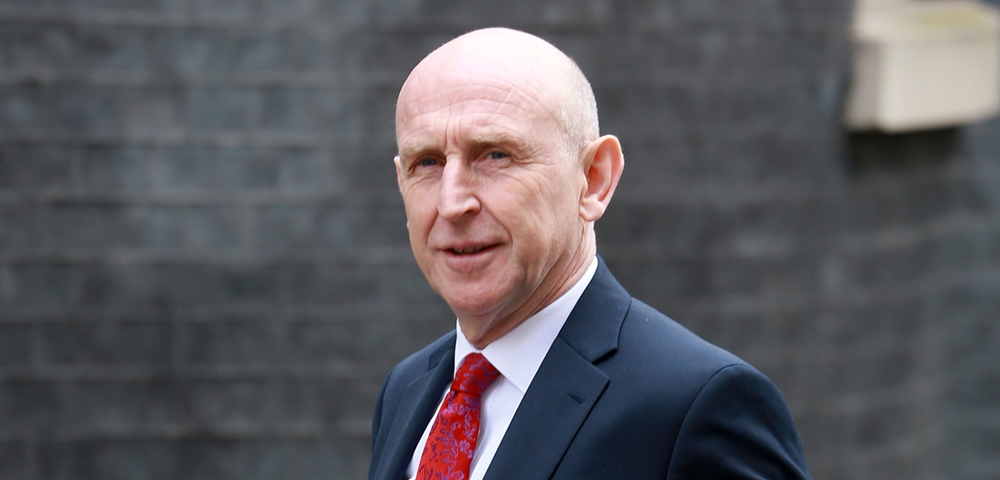
As John Healey prepares to deliver his first Budget as Chancellor on Wednesday, business owners, advisers and investors are calling for relief on costs, stability on tax and practical support to help smaller firms invest and grow.
John Healey will deliver his first Budget as Chancellor on Wednesday 28 October against a difficult economic backdrop. UK growth was just 0.1% in August, while CPI inflation has risen back to 3.5%.
For many businesses, the message is simple. Theo Wasserberg, Managing Director, UK and Ireland at Embat, says: “For UK plc, this Budget needs to be about making growth affordable again. That means breathing room on costs, confidence to hire and invest, and a stable regulatory environment.”
Rising costs are squeezing margins
New research from small business insurer Simply Business suggests that owners are holding their nerve, but that rising costs and policy uncertainty are affecting prices, staff hours and growth plans.
A survey of 1,464 small business owners, carried out between 30 September and 7 October 2026, found that half (50%) have raised their prices to offset rising operational costs, while 44% have absorbed them. Supplier and raw material costs (42%), energy bills (36%) and tax and regulatory compliance (19%) were most often named as one of the two business expenses that had risen the most. Despite this, 45% of owners are confident about their prospects over the next 12 months, while 42% are uncertain.
Julie Fisher, UK CEO at Simply Business, says: “The Autumn Budget is a golden opportunity for the new Chancellor to signal his support for the UK’s 5.7 million small businesses and place them at the heart of our economy’s growth plan.
“The message from small business owners is clear – they remain confident, but urgent support in key areas and a greater emphasis on long-term stability are needed if they are to fulfil their potential. From our research, 65% say political policy shifts are directly affecting their ability to plan. Without the stability needed to confidently invest in their business they are having to scale back their growth – whether that’s hiring employees or planning an expansion.”
Wasserberg agrees that costs are the immediate pressure point: “While the UK economy has proven to be resilient this year, rising labour, energy and operating costs are squeezing margins. Businesses need practical measures to restore confidence, and AI could be the key to achieving that.”
Pressure on the high street
The pressure is particularly acute for businesses with a shop front. Among those surveyed by Simply Business, 60% say the revaluation of rateable values has affected them. Of those, 35% have raised prices, 14% have reduced employee hours and 13% have let employees go. Shop-front businesses were also more than three times as likely to name employment and payroll costs as one of their two biggest cost rises (35%, compared with 11% of businesses without a shop front).
Fisher says: “There have been positive indicators in recent months with support measures announced across business rates for pubs and bars, but the high street is an ecosystem. Among the bricks and mortar businesses we surveyed, 60% say the revaluation of rateable values has affected them. Of those, over a third have raised prices, one in seven (14%) have reduced employee hours and one in eight (13%) have made the hard decision to let employees go. These businesses also face a further cost disparity: employment and payroll costs were named as one of the two biggest cost rises by 35%, more than three times the rate for businesses without a shop front (11%). Support should reach beyond pubs, alongside structural reform so owners are not left guessing what next year’s bill will look like.
“The VAT cut on electricity is another welcome move, including for the many owners who work from home. Extending it beyond March, and opening it up to more of the smallest businesses who currently pay the full rate, would give owners valuable breathing space.”
Taxing banks could raise the cost of finance
With speculation about higher taxes on banks, Katie Horne, savings expert at Flagstone, warns that small businesses could end up paying the price.
“The government needs to be careful about treating UK banks as an easy source of additional tax revenue when it is also relying on banks to help drive economic growth,” she says.
“Banks play a fundamental role in keeping small businesses in business – from lending essential finance to them, to providing them with ways to maximise their cash reserves and manage their cash flow. As Chancellor John Healey has said himself: banks are ‘hard-wired into the economic fabric’.
“If faced with bigger tax bills, banks could pass on some of the additional cost to business customers through more expensive loans and lower interest rates on deposits.
“The unintended consequences of bank taxes could extend far beyond the Square Mile; they could reduce the capacity for regional banks and building societies to lend and offer good rates to their local small businesses, reducing these companies’ scope to invest in their own growth, jobs, products and services.”
She adds that many SMEs have little margin left: “UK businesses have spent the past decade navigating Brexit, the pandemic, inflation and successive energy shocks, and now the scale of the challenge SMEs face is clear: 43% of SMEs doubt they can continue as they are for more than two years if today’s financial problems persist; 11% of businesses have considered closing altogether.”
Capital gains tax: a competitive edge or a source of revenue?
Capital gains tax has been one of the most closely watched issues before the Budget. Alexander Ogden, Director at business protection specialist Executive Life, believes the Chancellor is right to resist pressure to align it with income tax.
“Despite the various layers of taxation facing UK businesses, the country remains an attractive place to do business, offering stability, transparency and a strong legal framework. For most business owners who have built their lives here, relocating overseas is neither a practical nor a desirable option,” he says.
“At 24%, the UK’s top rate of Capital Gains Tax is below those of France, Germany, Spain and Italy, and founders selling a qualifying business pay 18% on their first £1 million of lifetime gains. Aligning Capital Gains Tax with income tax would have pushed the UK’s headline rate to the highest in Europe.
“Reports say the Chancellor resisted Cabinet pressure to align CGT with income tax, which would have pushed the top rate from 24% towards 45%. That would have placed the UK above every country in the Tax Foundation’s comparison, including Denmark, which currently has the highest rate.”
He acknowledges that nothing is certain until Wednesday: “The Budget on 28 October could still bring changes to any of these rules. But with the Chancellor reportedly holding CGT, alongside generous inheritance tax relief and SEIS, the UK makes a strong case as a place to start, build and eventually sell a business.”
Others are less sure that taxes on property and wealth will be left alone. Sam Lewis, Director of Debt Advisory at Heligan Group, says: “The Budget may be strongly focused on raising revenue from property and wealth while seeking to stimulate housing delivery. But these objectives risk working against each other. The fiscal arithmetic points towards assets, with capital gains tax widely reported as the front runner. These measures taken together can raise the cost of owning and holding property at the moment the Government needs private owners to fund and hold more of it.”
Housing needs private capital
Lewis argues that this creates a particular problem for housebuilding, which depends on private investment.
“Waiting is a position and it is the one most of the market has taken. Sentiment across the property finance market is close to binary, with few expecting a neutral statement,” he says.
“But the Government faces a fundamental contradiction: seeking to raise revenue from property and wealth while relying on private capital to fund more homes. A Budget that raises the cost of holding property while asking the private sector to deliver more will widen that gap. The developers and owners still transacting in 2027 will be the ones who structure their capital around it now.”
He warns that tax-driven sales could affect valuations and lending before any new measures take effect: “Disposals driven by tax rather than strategy tend to cluster around the same deadlines and this reset valuations. A lender sizing a development exit for 2028 will price that risk into terms agreed today.”
Several developers have mothballed sites this year because construction costs and achievable sales values have made them unviable, while a shortage of construction workers threatens delivery. “A Budget that funds delivery without tackling the construction skills shortage is paying for a pipeline that cannot be built on schedule,” says Lewis.
He sees the proposed Your First Home scheme as a possible way to restart stalled developments, but says the detail will be critical: “The income and price caps still to be published will decide whether it does.”
Institutional investors, he adds, remain wary of development risk: “The Government’s housing ambitions depend on the very schemes institutional capital is least keen to fund: those yet to secure planning, those where viability is marginal, and those still to be built. Capital is abundant at the far end of an asset’s life and scarce at the start.”
Hiring is on hold until confidence returns
Rising employment costs have also made businesses more cautious about senior hiring. Joel Barnett, Founder and Chief Executive of global executive search consultancy Fortune Hill, says:
“Businesses have spent much of this year being incredibly disciplined about expansion. The cost of employing someone in the UK has risen by almost 10% over the past year, energy prices have risen, and the wider cost of doing business has made organisations think much harder about where they add headcount and, particularly at senior level, whether an appointment will really move the business forward.
“Boards are asking whether somebody internally can step up, whether an existing leadership role’s scope can stretch even further, or whether an external hire brings a capability the business doesn’t have today. That shift is already visible in the market, with CIPD research showing that 48% of UK employers increased efforts to develop talent internally over the previous year.”
He believes the Budget could make the difference: “That makes the Autumn Budget especially important for hiring confidence. If businesses receive meaningful support with the additional costs they’ve been carrying, and the uncertainty they’ve faced, it should give boards the confidence to move ahead with senior appointments to execute the transformation plans that have been put on hold.
“However, if those pressures aren’t addressed, I think we’ll continue to see a hesitant market.”
Don’t cut off access to specialist skills
Potential changes to tax thresholds, dividend taxation and off-payroll working rules could also increase the cost of freelance talent. Luke Hicks, UK Lead at freelance management platform Malt, warns businesses against responding by freezing or cutting contractor numbers.
“The Autumn Budget could deliver a nasty shock to businesses that have lost sight of how much their independent workforce really costs,” he says. “Freelancers are no longer simply plugging gaps. They are delivering some of the most important transformation projects in British business, particularly in AI.
“The default reaction for many will be to hit pause on contractor hiring. That would be a big mistake. Cutting off access to specialist talent will bring innovation and growth to a dead halt. The issue isn’t the talent – it is that too many organisations are still managing this critical workforce through fragmented procurement processes, inconsistent rates and outdated engagement models.”
He argues that businesses need a clearer view of what freelancers actually cost: “A freelancer charging £700 a day does not necessarily cost the business £700. Once you factor in intermediaries, administration, compliance and the engagement model, the real cost can be very different.”
The same applies to compliance. “IR35 cannot be treated as a box-ticking exercise, nor should fear of it lead to blanket contractor bans,” says Hicks. “Businesses need to know who they are engaging, how they are classified and whether the contractual arrangements reflect the work actually being delivered.”
He concludes: “Independent talent is not the problem. Poor management of independent talent is. The Autumn Budget may change the rules, but it will not change the fundamentals.”
AI could help smaller firms compete
Several contributors see AI as one of the biggest opportunities to improve productivity, if businesses get the right support to invest in it.
Wasserberg says: “Our survey of European finance executives found that almost half expect their teams to see gains of up to five hours each week from AI. This equates to tangible productivity gains and could translate into meaningful economic growth. If the Government wants businesses to embrace AI, it must take concrete steps to support the technology and facilitate investment.”
San Nakra-Shah, Co-founder and Managing Partner at payments consultancy ChilliMint Europe, believes the Budget should focus more on helping the UK’s existing small businesses grow.
“We spend an awful lot of time talking about how to attract big businesses and major investment into Britain. Of course that matters. But what about the millions of smaller businesses we already have? Many are employing people, creating jobs and have ambitions to grow. Just imagine what they could achieve if we made it easier for them to take that next step,” she says.
“I can see the opportunity in our own business. At ChilliMint, we’re investing heavily in AI because we see ways to do things we couldn’t do before. We want to develop new capabilities, offer more to our clients and grow the business. This isn’t about doing the same work with fewer people. And I suspect thousands of other businesses are thinking along similar lines.”
She believes AI could even give smaller firms an advantage: “For years, large businesses have had the upper hand when it comes to technology. They’ve had the money, the people and the resources to invest in things that smaller firms could only dream of. AI is starting to change that. And in some ways, I think smaller businesses could now actually have the upper hand. They’re generally much more agile, can make decisions quickly and aren’t held back by the layers of complexity that often come with running a large organisation. Give them access to the right technology and there’s no reason why they can’t move faster than some of their much bigger competitors.”
Her comments come as the FCA highlights proportionate approaches to responsible AI adoption for smaller financial services firms. “That’s what I like about the FCA’s approach. It’s recognising that smaller firms don’t need to replicate everything a large bank does to start using AI responsibly. They can take a sensible approach, try things out and build on what works.”
But access to technology is only part of the answer: “Investing takes money, and for smaller firms, there’s often not much room for getting it wrong. That’s where the Chancellor could make a real difference: making it easier for businesses to invest in new technology, develop their people and take the risks that come with trying to grow.”
“So, as the Chancellor looks at how to encourage investment in AI, I’d like to see some real thought given to helping smaller firms make the most of the opportunity. Not just funding technology, but helping businesses understand where it can make a difference and giving them the confidence to use it.”
Stability above all
Across these very different sectors, one theme comes up repeatedly: businesses want a stable environment they can plan around.
Fisher says: “These announcements are all steps in the right direction but it’s clear that the community needs long term support measures and less frequent policy changes if they are to thrive. Given the right conditions small businesses can plan for the future, creating jobs and driving the growth the government wants to see.”
Nakra-Shah adds: “If we’re serious about getting the economy moving, perhaps we should spend a little less time looking for the next big investment to come into Britain, and a lot more time helping the businesses we already have become the big businesses of tomorrow.”