

What’s on your doorstep? This is the theme for this year’s International Day of Older People on 1 October, led by the Centre for Ageing Better, celebrating the local spaces, services and connections that help people live well in their communities.
It is a useful question to ask about our communities. But there is another question worth considering alongside it: who is building what is on our doorstep?
We often think of older people as users of local services and community spaces. Far less attention is given to the people over 50 who are creating businesses, social enterprises and organisations that provide those services and connections in the first place.
My research into social entrepreneurship in later working life, published in the International Small Business Journal and International Journal of Entrepreneurial Behavior and Research under the title Starting Up, Not 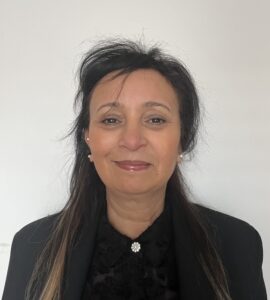 Slowing Down, found that later-life social entrepreneurs can be particularly active in identifying and pursuing opportunities to create social value. My work with entrepreneurs through the Help to Grow: Management Course has revealed similar examples of people drawing on decades of experience to address problems that they have encountered in their communities and working lives.
Here are the key things over 50s are bringing to the table through social entrepreneurship, and advice for those considering taking the leap.
What over 50s are bringing to the table
In in 2023 nearly half of self-employed people in the UK were over 50. But my research has found that beyond this, people in their fifties, sixties and beyond have a clear understanding of the problems they want to address – which is why many are turning to not just entrepreneurship, but social entrepreneurship.
Many have spent decades working in a particular sector, managing teams, serving customers or working alongside public and community organisations. Through accumulated experience, many older workers may have spotted specific challenges or gaps that have gone unnoticed. And now with more free time, many are taking steps to address them.
This includes looking differently at the places where people live and work. Someone who has spent years working in health, education, retail, housing or professional services may spot a local challenge that others have overlooked or see a way to connect organisations that have traditionally worked separately. The result can be something tangible on the doorstep: a new service, a community organisation, a social enterprise or a business addressing a local need.
The experience premium
One of the clearest advantages later-life social entrepreneurs can bring is experience. By later working life, many founders have accumulated professional knowledge, management capability and relationships that can become valuable entrepreneurial assets. This might be thought of as an “experience premium”: a combination of sector knowledge, credibility, confidence and established networks.
Social ventures can require founders to work across a particularly wide range of organisations and interests. A project might involve local authorities, health providers, schools, charities, businesses and community groups, while also needing to remain financially viable. For someone who has spent decades managing teams, solving operational problems or working through institutional processes, this complexity can be familiar territory.
The value of experience can also extend to setbacks. Later-life founders may have already dealt with restructures, career changes, difficult decisions and professional disappointments. That experience can provide perspective when a new venture encounters inevitable challenges. This does not mean experience removes the risks of entrepreneurship. It can, however, give founders a different set of resources to draw on when building something new.
Turning experience into something communities need
For many people over 50, the decision to start a business or social enterprise is prompted by a reassessment of what they want their working life to achieve. After decades in employment, priorities shift. People start using their professional expertise in new areas to tackle issues they care about, whether that is improving access to a service, supporting a particular group or responding to a need they have seen first-hand. Later-life entrepreneurship is less about starting again and more about applying what someone already knows in a different context.
Advice for later-life founders
For anyone over 50 considering social entrepreneurship, there are two practical lessons I would take from my research and my work with founders.
First, treat your networks and sector credibility as entrepreneurial capital. The relationships built over a career can help a new venture establish trust, find partners and understand the environment in which it will operate. Professional knowledge can be just as useful as financial resources when an idea is being developed.
Second, do not assume you have to build alone. Intergenerational teams can bring together different experiences, perspectives and skills. Later-life founders can contribute sector knowledge and experience while younger colleagues may bring different perspectives, capabilities and approaches. The exchange can work in both directions.
Who is building what’s on our doorstep?
The theme of this year’s International Day of Older People is a reminder to look at the places, services and connections that make communities work. But these things do not appear by themselves. Behind the local business, social enterprise, support service or community organisation can be someone who has spent decades building knowledge, relationships and confidence before deciding to turn that experience into something their community needs.
So, when we ask what is on our doorstep, perhaps we should also ask who built it. Some of the people creating the businesses, services and organisations that shape our communities are doing so later in their working lives. Their age is not a reason to overlook them as entrepreneurs – instead, it is part of what they bring to the table.
Dr Zeineb Djebal, Senior Lecturer in Entrepreneurship at the University of Liverpool Management School and Academic Programme Director for the Help to Grow: Management Course