
Running a small food and drink brand can be an uphill battle. For challenger businesses, the obstacles are often less about the quality of the product and more about the systems, costs and practices surrounding it. When you are competing against much larger and better-funded businesses, even relatively small barriers can have a significant impact.
Purple Pilchard asked a group of founders to name their single biggest business gripe. What came back was a collection of candid, considered and sometimes strongly worded responses that highlight some of the realities of trying to build a small food and drink brand in the UK.
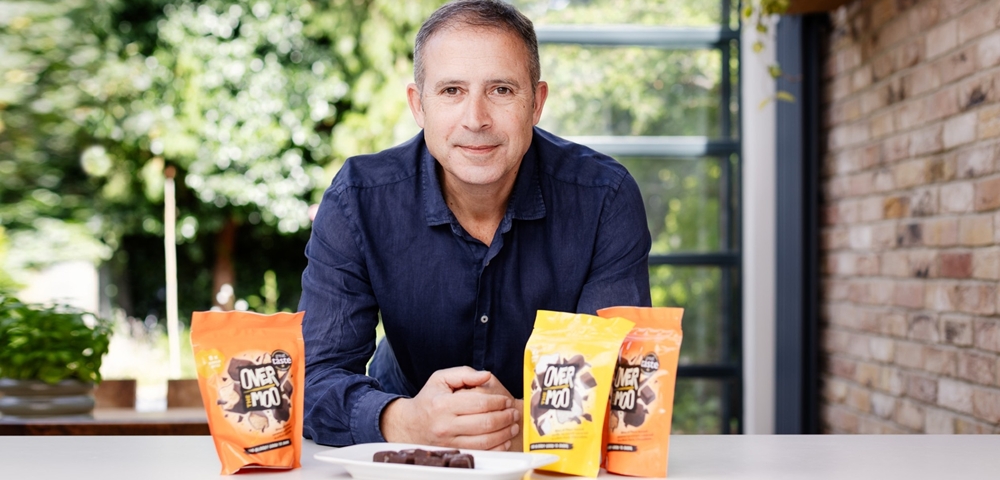
- Simon Goodman – Founder Over the Moo Vegan Ice Cream Bites
It shouldn’t be this hard to sell abroad. Nine in ten UK small businesses never export a single product or service. Not because the world doesn’t want what we make, but because of everything standing between making it and shipping it. For us, export isn’t a bonus, it’s the whole point. Most of the world can’t properly digest dairy, and we built a business to sell to it. Portugal, the UAE, soon the rest of the EU. The demand is real and it’s already buying. What isn’t real is the idea that any of this is simple. Customs, VAT, clearance, food checks, all repeated fresh for every new country. None of it is impossible, but none of it is built for a small business learning it alone for the first time. With the right help early on, most of that 90% could be selling abroad within a year. Right now, we’re mostly left to work it out ourselves.
- Ian Butt – Commercial Director Potts’ Partnership
Dealing with “the big boys”.
As a small brand, working with the UK multiples provides many opportunities but also its fair share of potential pitfalls or frustrations.
As a small brand, when a large retailer say jump, you say how high. However, I feel there is some responsibility on the part of the retailer to act in accordance with the size of your business and this is not always the case.
In the past we have been encouraged to spend huge sums of money on inhouse marketing in return for a listing, a practice which is common and seems fine on the surface until you realise that a fair amount of the activation this buys costs the retailer next to nothing and yields just about as much in increased sales too… We have always pushed back on being coursed into spending huge sums on marketing mostly because we genuinely don’t have the budget but we have seen myriad small brands throw all of their available funds at this stuff and suffer greatly off the back of it…
Then there’s the seemingly deliberate tactics of retailers losing or misplacing your invoices. This in itself can be difficult if only noticed after your 30 (or even 60) day terms are up and the funds haven’t arrived but when the retailer then states that now they have a copy of the lost invoice, they will reset this invoice to their original terms adding yet another 30 (or 60 ) days to the payment date… This can be devastating to a small business’s already stretched cash flow. Once you have seen this 10 or so times, the practice almost seems to be policy rather than coincidence…
I should say that the mults are also filled with food lovers, NPD wizards, risk takers, care takers and some folks I consider my friends. They provide thousands of brands with a launchpad every year and have the power to change your fortunes, but with businesses so vast their systems and strategies also have the power to inflict real damage on small business.
So go ahead, jump at the opportunity, it will be a great ride. But do so with your eyes open.
- Ineke Nugteren – Founder of Nourish Gut Health Friendly Snacks
“We spend more, wait longer and work harder to source ingredients that genuinely support gut health and blood sugar balance – because that’s the whole point of Nourish. Meanwhile, bigger brands slap on a wellness halo (dressed up in ‘healthy packaging’) with a fraction of the scrutiny and none of the substance and still get to the shelves faster and cheaper. It really is this hard to compete on integrity when integrity isn’t actually what’s being rewarded.”
- Matt Hunt – Co-Founder Protein Ball Co
“It shouldn’t be this hard to manufacture food in Britain and make a profit, but it is and it seems to get harder every bloody year. Time and again we’ve lost supermarket listings to imported products because they’re a few pence cheaper. We even lost one to an Australian brand, despite making the product here in the UK as they were VAT exempt.
Supermarkets love to talk about supporting British businesses because it’s good for their image, but in truth it appears that price is the only meaningful metric. If they remain wedded to prioritising products from overseas to save a few pennies, what’s the benefit of championing UK production?
I’m so envious of nations like Australia, France, The Netherlands…. for whom buying local still has real cache. What about a bespoke Made in Britain style stamp that’s driven by the government to get behind to positively discriminate in favour of local heroes
sorry no pithy anecdote comes to mind the subject remains a real gripe for us – we’re just waiting for a pro-active government that genuinely gets behind small business.”
- Ed Van Der Lande – Founder More Toddler Meals
“It shouldn’t be this hard to do right by toddlers. The 2025 Commercial Baby Food and Drink Voluntary Industry Guidelines restrict the amount of salt and sugar in products aimed at children under 3 but, as the name outlines, they are only voluntary. Our meals are naturally low in salt and sugar but if the guidelines are not enforced, bigger brands stay free to sell sweeter, cheaper versions. Not only can this be detrimental to toddler health, it also means a toddler raised on sweet pouches learns to expect sweet, so our savoury food can taste “boring” to a palate the competition has already trained. Doing right by a small child has become a competitive disadvantage. These guidelines must be mandatory for challenger brands to compete on a level playing field.”
- Steve Sailopal – Co-Founder Curry Smugglers
“Everyone talks about celebrating Britain’s multicultural society, but walk down most supermarket snack aisles and you’d never know it. Why are South Asian snacks still expected to sit in the ‘world foods’ aisle, often in tired clear plastic bags, while crisps, popcorn and nuts are free to compete as mainstream snacks? I remember sitting with a supermarket buyer who looked at our products and asked, “What aisle would we put you in?” My jaw nearly hit the table. The answer seemed obvious: the snack aisle. They’re snacks.
Yet too many brands rooted in Britain’s diverse food culture are still treated as niche rather than mainstream. The irony is that consumers have already moved on. They’re looking for bold flavours, great design and authentic stories. It isn’t shoppers holding these brands back it’s the industry’s habits. Britain has one of the richest and most diverse food cultures in the world. It’s time our supermarket shelves reflected it.”