
Building a cleaning business is not glamorous or easy. It is a daily test of people, standards and resilience. Alex Williams, CEO of Tiger Cleaning, reflects on the trials, joys and lessons behind the company’s journey towards seven-figure turnover.
Growth built in the real world
When people talk about scaling a business, the conversation often centres on technology, investment and rapid expansion. Cleaning is different. It is a traditional, people-intensive industry in which the quality of your business is judged every day, at every site, by the work delivered on the frontline.
Tiger Cleaning has grown to approximately £800,000–£900,000 in annual turnover, with a team of around 30–40 people, and we are working towards the £1 million milestone. I am proud of that progress, but the figures only tell the polished part of the story. Behind them are early mornings, late-night calls, difficult contracts, staffing pressures, cash-flow decisions, mistakes, setbacks and a great deal of persistence.
There have been times when I have questioned whether the next stage of growth was worth the pressure. There have also been moments of genuine joy: seeing employees develop, winning contracts that once felt beyond our reach, receiving messages from satisfied clients and watching the Tiger Cleaning name gain recognition. The trials and the rewards have always existed side by side.
The hardest part of growth is people
Cleaning businesses do not scale through software alone; they scale through people. Recruiting reliable employees is challenging, but retention, training and maintaining standards across multiple sites are harder still. A client does not see the recruitment problems behind the scenes. They simply expect the building to be clean, secure and ready for use.
As the company grew, I had to move from personally solving every problem to building a structure that could solve problems consistently. That meant clearer supervision, better training, documented processes, quality checks and stronger communication. It also meant accepting that leadership is not only about giving instructions. You have to listen to the people doing the work, understand what is realistic on site and recognise good performance.
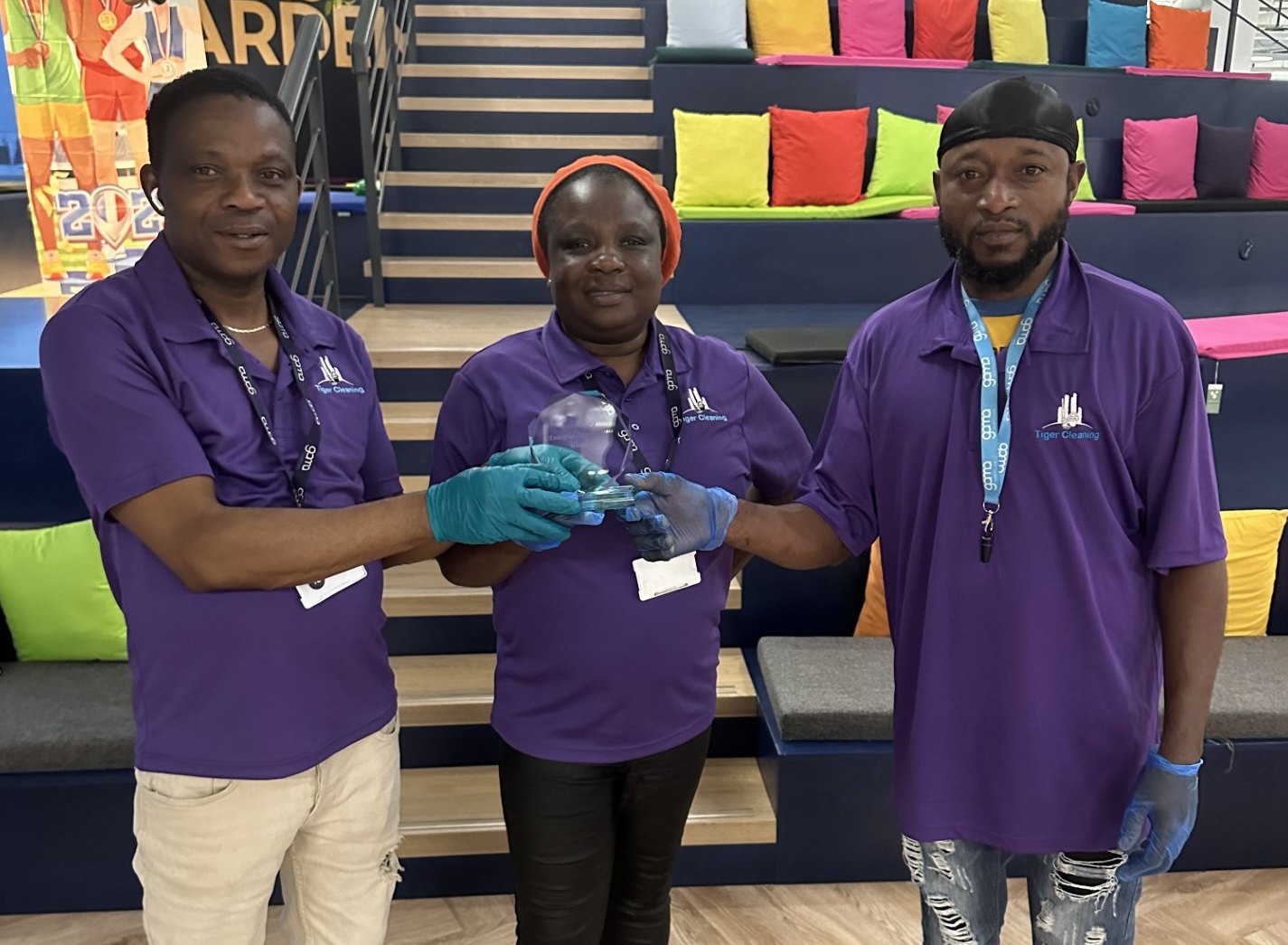
Frontline employees can sometimes feel invisible, even though their work affects health, safety, productivity and the first impression of every building they enter. One of my strongest beliefs is that cleaning teams deserve respect and recognition. When people feel valued, supported and accountable, service quality improves.
Learning through setbacks
Not every contract has been right for us, and not every decision has worked. We have dealt with clients who underestimated the time required, last-minute changes, staff absences, rising wage and supply costs, delayed payments and tenders that demanded considerable work without any guarantee of success.
The temptation in a competitive industry is to win work at almost any price. We learned that an unprofitable contract can damage the entire business. It creates pressure on employees, reduces the time available for proper
supervision and makes it harder to maintain the standard on which your reputation depends. Growth for the sake of turnover is not enough; the work must be sustainable.
Cash flow has been another important lesson. A business can look successful on paper while still experiencing pressure because wages and materials must be paid before some clients settle their invoices. Better forecasting, disciplined pricing and firm payment processes are not exciting topics, but they are essential to survival.
Systems without losing the human touch
As we took on more clients and locations, informal ways of working were no longer enough. We invested in accreditations, policies, risk assessments, training records and quality-control systems. These are sometimes viewed as paperwork, but when used properly they protect employees, give clients confidence and allow a growing company to deliver consistently.
Technology also has a role. Digital scheduling, time-and-attendance systems, electronic quality audits and better reporting can reduce administration and give managers a clearer view of performance. Artificial intelligence may help with planning, customer communication, tender research and identifying trends. Robotics will become more useful in large, predictable environments.
However, technology should support cleaners rather than treat them as disposable. Many sites require judgement, flexibility, trust and attention to detail that machines cannot replace. The best operators will combine efficient systems with experienced people and strong relationships.
The joy behind the awards
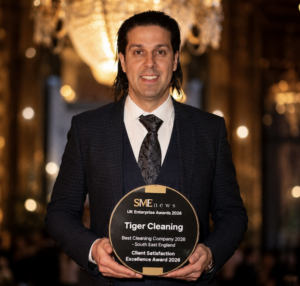
Recognition has brought some of the happiest moments in the journey. Tiger Cleaning was named Best Commercial Cleaning Company 2024 – South East England and Commercial Cleaning Company of the Year 2025 – London & South East England. Most recently, we received a double honour at the UK Enterprise Awards 2026: Best Cleaning Company 2026 – South East England and the Client Satisfaction Excellence Award 2026.
Awards are not the reason we do the work, but they matter because they recognise the contribution of the entire team. The Client Satisfaction Excellence Award was particularly meaningful. In a service business, client trust is everything, and that trust is earned by people turning up and delivering, day after day.
Media coverage in The Independent, New York Post and other publications has also helped demonstrate that an ordinary service business can have an extraordinary story. The cleaning sector may not receive the attention given to technology companies, but it offers valuable lessons about employment, operations, resilience and community.
What comes next
The immediate goal is to move beyond £1 million in annual turnover, but I want to do it in the right way. The next stage will focus on winning larger, longer-term commercial and facilities-management contracts, strengthening our management structure and continuing to develop our presence across London and the South East.
We will keep investing in training, compliance, supervision and practical technology. I also want Tiger Cleaning to create more progression for frontline staff, so that people can move into supervisory and management positions as the business expands.
My biggest lesson is that scaling is not one dramatic breakthrough. It is hundreds of small decisions: whether to pursue a contract, how to price it, who to recruit, how to respond when something goes wrong and whether to protect standards when taking an easier route would be more profitable in the short term.
The journey has included struggle, pressure and sacrifice, but it has also brought pride, relationships and opportunities I could not have imagined at the beginning. Reaching £1 million will be an important milestone. The real achievement, however, will be building a business that clients trust, employees are proud to represent and that can continue growing without losing the personal service that created its reputation.