

We read 1,671 customer reviews to find out who buys from us. It wasn’t who we thought.
We sell engraved wooden watches, here at The Wood Look. For years, we pictured our customer as a man who likes watches, has a bit of an eye for something different, and fancies a wooden one. Our photos, ads, and product pages were all written for him.
Then we did something we should have done years earlier. We exported every review we’d ever received, all 1,671 of them going back to 2018, and actually read them. Not the star ratings. The words.
It turned out we’d been talking to the wrong person.
Then we did something we should have done years earlier. We exported every review we’d ever received, all 1,671 of them, going back to 2018, and actually read them. Not the star ratings. The words.
What the reviews said
The first surprise was that almost nobody was buying for themselves. Between 85% and 90% of our reviews described a gift. Only about 29 reviewers said the watch was for them, and even then it was often a second purchase after giving one away.
The second surprise was who was buying. When we counted who the watch was for:
- Husband came up 444 times. No other recipient came close.
- Partners, boyfriends and fiancés: 150.
- Sons: 129.
- Dads: 79.
So our real customer wasn’t a man browsing watches. In about half the reviews where we could tell, it was a woman buying for her husband or partner. Her husband was usually “hard to buy for”, often “has everything”, and quite often already collected watches.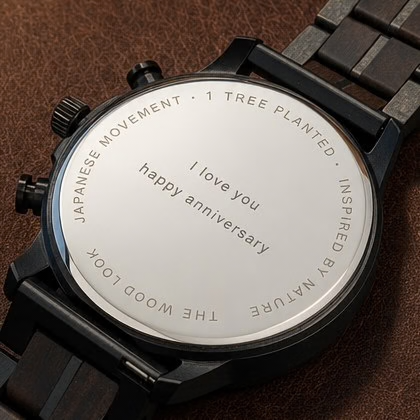
The occasions were just as clear. Birthdays came up 331 times, and mostly milestones: 40th, 50th, 60th. Christmas 188. Anniversaries 152, with one standing out: the fifth wedding anniversary, which is traditionally wood. Dozens of reviewers mentioned it unprompted.
The words customers used
The most useful part wasn’t the numbers. It was the language. Reading hundreds of reviews in a row, the same phrases kept coming back: “Over the moon”, “He hasn’t taken it off since”, “I can’t wait to see his face” and “So hard to buy for”
That told us what our customer was really buying. It wasn’t a wooden watch. It was the moment her husband opened it, and the proof every day afterwards that she’d got it right. You can also use this information in adverts too.
The reviews also showed us what nearly stopped people from buying. “I was a little sceptical ordering as it was from a Facebook ad.” “I was unsure about quality due to the price.” “Worried it wouldn’t arrive in time.” Each of those is a question we can answer before anyone has to ask it.
What we changed
- We started writing for the person buying the gift, not the person wearing it. Product pages now say who each watch suits and what occasion it’s good for.
- We built a proper guide to the fifth wedding anniversary, because so many customers were already thinking, “five years is wood”.
- We wrote gift guides for partners and gift givers, rather than only describing the watches.
- We put delivery dates front and centre, especially at Christmas, because people kept asking whether a present would arrive in time.
We highlighted the engraving more, because it was the most praised feature, mentioned 382 times. It’s the bit that turns a nice watch into a gift that means something.
How to do this with your own reviews
You don’t need software or a consultant. You need your reviews in a spreadsheet and a free afternoon.
- Export everything. Most review platforms, marketplaces and shop systems let you download your reviews as a spreadsheet. Include the old ones. Years of reviews show patterns a few months can’t.
- Ignore the stars at first. Read the words. We found several glowing reviews with low star ratings and the other way round. The text is far more reliable.
- Count who it’s for. Search the text for words like husband, wife, mum, dad, son, daughter, friend, myself. The totals will tell you who your buyer is, and whether they’re buying for someone else.
- Count the occasions. Birthday, Christmas, anniversary, wedding, retirement. Look for the ones you didn’t expect.
- Collect the phrases that repeat. Copy them into a list. These are the words your customers actually use, and they make far better headlines than anything you’ll write from scratch.
- Read the bad reviews carefully. One, two and three stars show what nearly stopped people from buying, and what goes wrong after they do.
- Then change one thing and see what happens. A headline, a product description, the first line of an ad
Final tip: A lot of this can be automated with Claude, simply plug it into your reviews package and it will automate much of this hard work for you. This is where AI can actually be helpful for long, relatively boring or error prone tasks.
The lesson
We’d spent years guessing who our customer was, and the answer had been sitting in our own reviews all along, written by the customers themselves. If you’ve got a few hundred reviews, you’ve got the best market research you’ll ever have, and you’ve already paid for it.
About the author
James Micklewright is co-founder of The Wood Look, a family business in Stourbridge that has been engraving personalised wooden watches and bracelets since 2017. https://www.thewoodlook.com/