
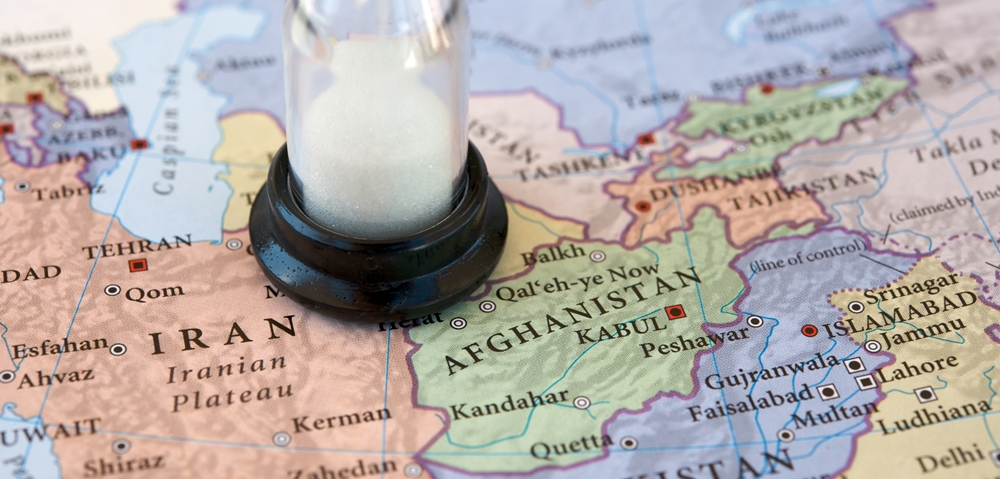
The escalating conflict across the Middle East is already having a major impact on the global economy – oil prices jumped around 10% after ships were attacked near the Strait of Hormuz whilst international shipping through this key trade route has been severely impacted. For Small and Medium-sized Enterprises (SMEs), these geopolitical shifts translate into immediate operational pressures, ranging from fuel volatility to broader supply chain contagion.
As Patrick Farrell, Group Chief Investment Officer at Charles Stanley, part of Raymond James Wealth Management, comments:
“The primary impact of the conflict in the Middle East is being felt in energy markets. Oil prices spiked over 10% following news of the escalation. Attention has also turned to the Strait of Hormuz – a critical maritime chokepoint through which 20%–30% of global oil and liquefied natural gas (LNG) shipments pass. While Iran has not formally closed the waterway, vessels have reported warnings from Iranian forces, and several tanker operators have temporarily paused shipments as a precaution. These developments naturally raise questions about global energy prices, inflation, and market volatility.”
This energy spike is felt most acutely by those managing logistics on the ground. The sharp move in oil markets is a reminder of how quickly fuel costs can turn. Paul Holland, Managing Director for UK/ANZ Fleet at Corpay, including UK brand, Allstar, notes that for UK fleets, the key issue is not just whether pump prices rise, but how volatile they may become in the weeks ahead.
“Brent crude briefly jumped into the low $80s after the latest escalation in the Middle East, with the risk premium now firmly back in the price. For UK fleets, the key issue is not just whether pump prices rise, but how volatile they may become in the weeks ahead. We know that even short-term disruption around the Strait of Hormuz, which carries around a fifth of global oil supply, can ripple through wholesale markets very quickly.
“What fleet operators are telling us is simple. They want tighter visibility and more control when markets move like this. Small swings at the pump add up fast across a large vehicle base. The next step for many businesses is practical. Monitor fuel data closely, review purchasing behaviour and make sure policies are doing the job. In periods like this, the organisations that stay closest to their fuel data are usually the ones that manage the cost shock best.”
Beyond the immediate cost of fuel, the disruption to trade routes creates a domino effect across the entire product lifecycle. Chris Clowes, associate director at global supply chain and consultancy, SCALA, highlights the specific risks to freight:
“From a supply chain perspective, the biggest risk of the escalation in the Middle East is wider instability that could affect both energy prices and the routes used to move everyday goods. Air freight is likely to feel the impact fastest. If airlines must avoid certain airspace, capacity falls and flight times increase, pushing up rates quickly, with time-critical goods such as medicines, semiconductors and high-value technology among the most exposed.
“When it comes to sea freight, which is typically used to transport everything from clothing to consumer electronics, the Suez Canal isn’t formally closed, but if security risks rise, more Asia to Europe services are likely to divert via the Cape of Good Hope. That can add around 10 to 15 days and increase fuel and insurance costs. Longer voyages also tie up ships and containers, which can tighten wider capacity and push up rates beyond the region. Then there is the matter of energy; even partial disruption or perceived risk around the Strait of Hormuz could trigger a rapid rise in oil and liquefied natural gas prices, feeding through into transport, manufacturing and packaging costs in turn.”
For SMEs, these rising overheads threaten to squeeze margins to a breaking point. Sam Coyne, CEO Europe at cross-border payments company Currenxie, warns that the consequences will eventually reach the end consumer:
“Rising oil prices might grab the headlines but escalation across the Middle East will result in price hikes across all industry supply chains. The crippling of key trade routes will prolong uncertainty and continue to drive up supply costs, squeezing merchant margins ever further and ultimately leading to a spike in the cost of consumer goods and surging inflation.
“Recent research from the Chartered Institute of Procurement and Supply (CIPS) recently warned that due to rising costs of transport, energy and raw materials, consumer goods prices could soar during 2026. The events over the weekend are likely to make such forecasts inevitable and global businesses and consumers will rightly be hugely concerned of the longer-term impact on supply chain costs and the price of products on the shelves.
“As businesses face rising costs, they are presented with an ever-greater challenge to remain competitive and drive growth. The ability to be agile and enter new markets – whether that is to source new suppliers or expand the customer base – is key to growth, however many SME retailers face high costs when dealing with global payments. In some cases the only option is to pass on these increased costs to the end consumer, however, this is likely to hit revenues. For those businesses operating internationally, multi-region treasury management, reliable settlement times, and FX risk and margin management are critical – traditional bank services aren’t built for international SMEs and offer higher costs and slower processing times, these businesses need to ensure they have access to secure, fast and cost-effective cross-border payments and local market expertise if they are to continue to compete and fuel growth.”
Despite the tangible strain on supply chains, there is a call for a measured approach to broader market strategy. Patrick Farrell concludes that while geopolitical tension creates noise, the fundamental economic backdrop remains resilient:
“While the situation in the Middle East has understandably unsettled markets, it’s important to maintain perspective and avoid knee jerk reactions. Periods of geopolitical tension often bring short-term spikes in market volatility, but diversified portfolios – particularly those with allocations to high-quality bonds, defensive equities, and alternative assets such as commodities – tend to be resilient. Safe-haven flows into assets such as the US dollar, gold, and government bonds have already helped stabilise broader markets.
“From an economic standpoint, the global backdrop remains more influential than any single geopolitical event. Growth across Europe and Asia continues to strengthen, while US activity has cooled but remains consistent with steady expansion. Inflation, although sticky in places, is trending lower across most major economies. Central banks, including the Federal Reserve and the Bank of England, are likely to remain measured, responding to underlying economic data rather than short-term geopolitical developments.”