
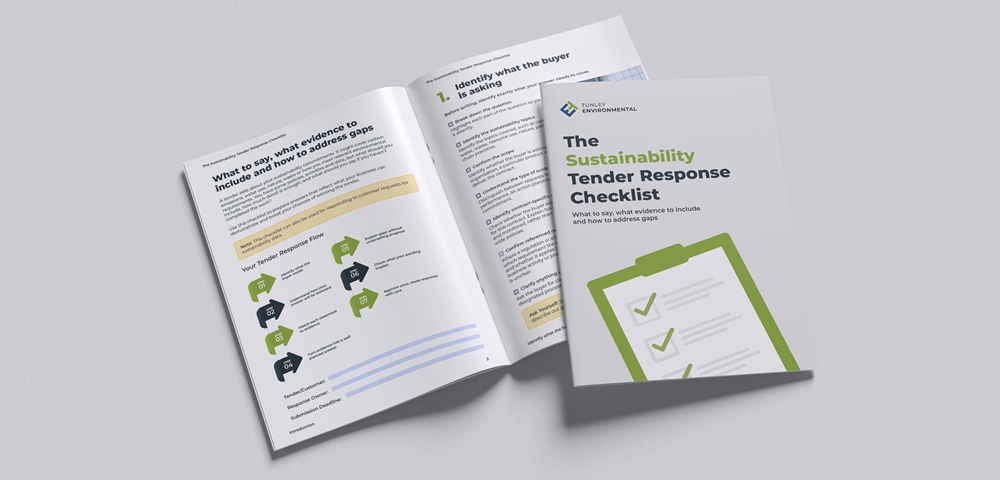
 Tunley Environmental has launched a new free Sustainability Tender Response Checklist to help organisations answer sustainability questions in tenders and customer requests more accurately and confidently.
Questions regarding sustainability are now a regular occurrence across procurement processes, covering areas such as carbon emissions, water use, nature, waste, resource use and environmental requirements. However, businesses can often have relevant policies, activities and data without knowing exactly what evidence to include, how much detail is required or how to respond when work is still underway.
Tunley Environmental’s new checklist provides a useful seven-step process for developing stronger responses, helping organisations identify what the buyer is specifically asking for, understand how their answer will be assessed and match individual statements with appropriate supporting evidence.
The checklist covers:
- How to identify exactly what a buyer is asking for and confirm the scope of the question
- How to use scoring criteria and mandatory requirements to plan a response
- How to match sustainability statements with the right supporting evidence
- A practical structure for turning technical evidence into a clear tender answer
- How to explain evidence gaps without underselling work already completed
- How to check that environmental claims do not go beyond what the evidence supports
- How to approve, store and carefully reuse responses for future tenders
It also includes examples showing how businesses can strengthen vague sustainability statements by adding specific information, initiatives, responsibilities, supporting documentation and clear limitations.

Commenting on the launch, Dr William Beer, CEO & Founder at Tunley Environmental said:
“Responding to sustainability questions in a tender can become complicated very quickly. Businesses may already be doing valuable work, but clients often approach us about the challenge if using the right evidence and communicating it in a way that directly answers what the buyer has asked.
“This checklist is designed to help organisations progress away from broad statements about their sustainability commitments and towards specific answers that can be supported with appropriate evidence.”
The checklist also encourages businesses to be transparent where information is incomplete. Rather than overstating progress, organisations are guided to clearly distinguish between completed work, activity currently underway and future plans, while recognising that an explanation cannot replace evidence where a tender makes a particular requirement mandatory.
Before submission, the checklist provides a final review covering whether the question has been answered directly, instructions have been followed, statements are supported by evidence, gaps have been explained and any commitments are realistic and approved.
The Sustainability Tender Response Checklist is now available to download free from the Tunley Environmental website.