
Private Healthcare Has a Middle-Class Problem, Argues David Jennings of SignpostMe
For decades we’ve treated it as a premium benefit. Something for executives, senior managers and people working for large companies with generous benefits budgets.
Given the issues we face today, does the industry need to ask itself whether that still makes sense?
Illness isn’t particularly interested in a job title. A warehouse operative can need an MRI just as urgently as a Finance Director. A plumber waiting for a knee operation can be unable to earn. A working parent waiting months for answers can find their entire family affected.
Yet access to private healthcare remains heavily influenced by who you work for and what that employer can afford.
That’s particularly problematic for SMEs.Large organisations can absorb absence. If one person in a 1,000-person workforce is waiting months for treatment, the business adapts.
If you’re a company employing 15 people and it’s your operations manager, lead engineer or best salesperson, it’s a very different story.
The obvious answer used to be private medical insurance. But comprehensive PMI simply isn’t affordable for every employer.
So we need another answer. If private healthcare is going to play a greater role in keeping Britain healthy and working, the industry has to get serious about accessibility.
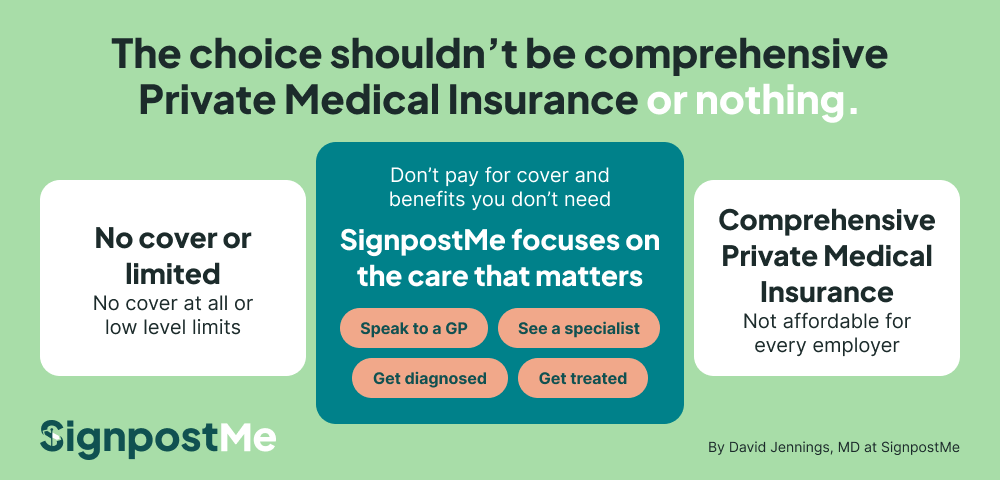
That means questioning whether every employee needs every element of traditional PMI, or whether more targeted cover could give many more people access to the things that matter most: a GP, a specialist, diagnostics and treatment when it’s needed.
The choice shouldn’t be comprehensive private medical insurance or nothing. There is an enormous amount of space in between.
SignpostMe was built in that space, and we’re not alone in recognising the opportunity. I believe the providers willing to rethink who private healthcare is for will shape where the market goes next.