

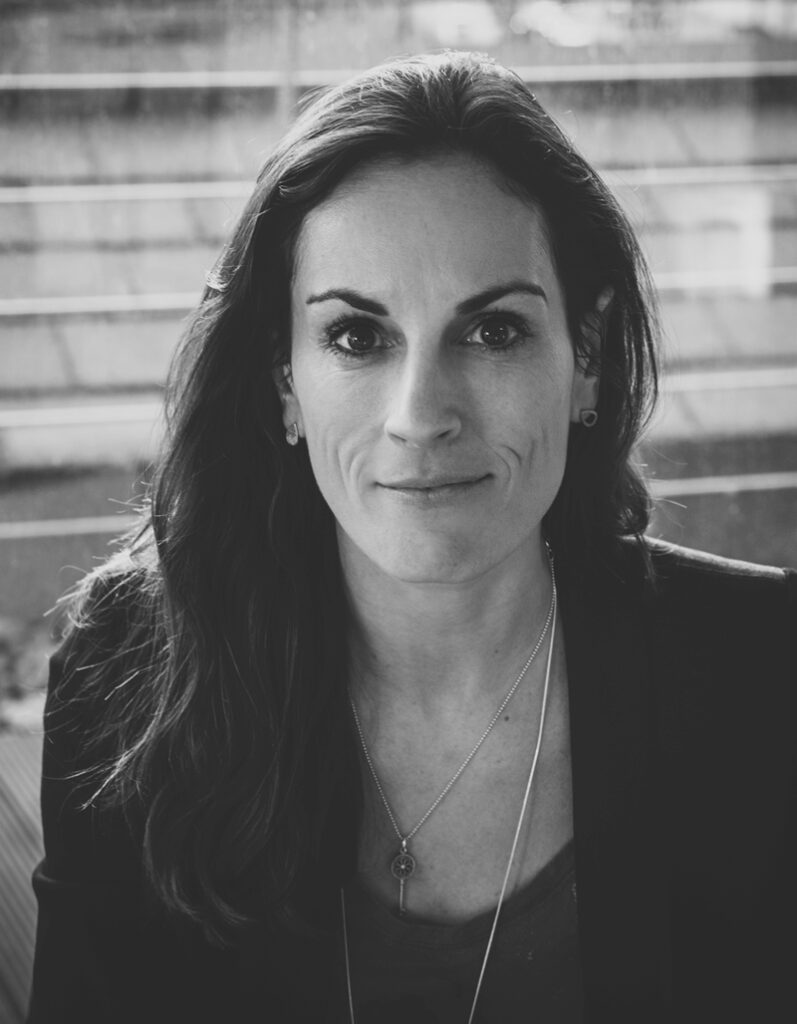
Sonia Ouarti is a neuroscience‑trained performance coach and former senior leader at Amazon Web Services. She now works with founders and leadership teams, and her message is simple: burnout isn’t a personal weakness, it’s a biological state that affects how founders think, decide and lead. In this article, she explains why founder burnout has become a systemic risk for the startup world, and why investors should treat it as a performance and governance issue, not a wellbeing concern.
The UK’s startup economy is expanding rapidly. Tens of thousands of new businesses are being created each quarter, capital continues to flow into early-stage ventures, and investors are under pressure to identify scalable opportunities in an increasingly competitive market.
But there is a growing risk embedded in this model that receives far less scrutiny than valuation multiples or runway calculations: founder burnout.
Recent studies suggest that more than half of startup founders experience burnout, reporting chronic stress, anxiety and impaired cognitive performance. For investors, this should not be viewed as a wellbeing concern. It is a performance and governance issue with direct implications for decision-making quality, execution risk and long-term returns.
The prevailing narrative in startup culture still frames burnout as a personal failing or a lack of resilience. Neuroscience tells a different story. Burnout is not a mindset problem. It is a biological state driven by prolonged exposure to uncertainty, over-responsibility and continuous cognitive load.
Founders operate in environments characterised by high stakes, incomplete information and relentless decision-making. Over time, the brain adapts by shifting into a sustained threat response. This has measurable consequences. Brain regions involved in memory, learning and strategic thinking become less effective. Reactivity increases. Cognitive flexibility narrows. Creativity and long-term planning suffer.
These changes are often invisible to boards and investors until performance deteriorates. By the time missed opportunities, execution errors or leadership instability become apparent, the biological damage is already well established.
Crucially, this is a reversible process. Decades of neuroscience show that the effects of chronic stress on the brain are reversible through evidence-based interventions that leverage neuroplasticity. The problem is not that solutions do not exist. It is that they are rarely integrated into the investment ecosystem.
Earlier this month, I worked with a cohort of startup founders at Google’s King’s Cross headquarters, examining burnout through a biology-first lens. The focus was not on coping strategies or motivation, but on how chronic stress reshapes the brain and how founders can intervene early to protect cognitive performance.
The impact of recognising burnout as a biological state – and treating it as such works well. Founders who take action can return to their prior state – clearer thinking, improved decision-making and renewed strategic focus. Not because they reduced ambition, but because they learned how to regulate their stress response and protect cognitive bandwidth.
From an investor perspective, this matters. Founders are not interchangeable assets. In early-stage companies especially, the founder’s brain is the company. When cognitive performance degrades, risk increases across every dimension investors care about, from capital allocation and hiring decisions to strategic pivots and crisis response.
Yet most accelerators, funds and grant-making bodies continue to assess founder capability almost exclusively through past performance, pitch quality and growth metrics, while ignoring the biological sustainability of the person expected to deliver future returns.
This is a blind spot.
If burnout impairs judgement, narrows thinking and increases reactivity, then ignoring it is equivalent to ignoring leverage, liquidity or concentration risk. It is a failure of due diligence, not compassion.
The investment community does not need to become a wellbeing provider. But it does need to recognise that evidence-based resilience training is a form of risk mitigation. Embedding neuroscience-informed performance support alongside capital, mentoring and governance should be seen not as an optional add-on, but as part of responsible investment practice.
The UK has an opportunity to lead in building a startup ecosystem that values sustainable performance as much as rapid growth. That will require a shift in how investors think about founder capacity, not as an infinite resource, but as a biological system with limits that can be protected or depleted.
Founder burnout is no longer a personal issue occurring on the margins of startup life. It is becoming a structural risk in the innovation economy.
Investors who recognise that early will be better positioned to protect both their founders and their returns.
1 Comment
Pingback: Business Time Management for Start-Ups - SmartWealthNews.com