
Expert Market’s latest survey data reveals that 80% of U.S. small and medium-sized businesses say software and technology costs have had a negative impact on profitability in the past month.
SMB leaders are re-evaluating tech spend
As businesses look to reduce costs and improve efficiency, 73% are reevaluating their technology investments.
According to the data, of the 56% of SMBs who switched to a core platform in the past 12 months,13% report ‘significant’ regret. Choosing the right enterprise software is a strategic decision and not always as straightforward as it may seem.
6 tips to avoid tech switch regret:
To help businesses make more confident choices, Expert Market has identified six key factors SMB leaders should consider before switching enterprise software.
1. Choose a vendor that fits your business needs
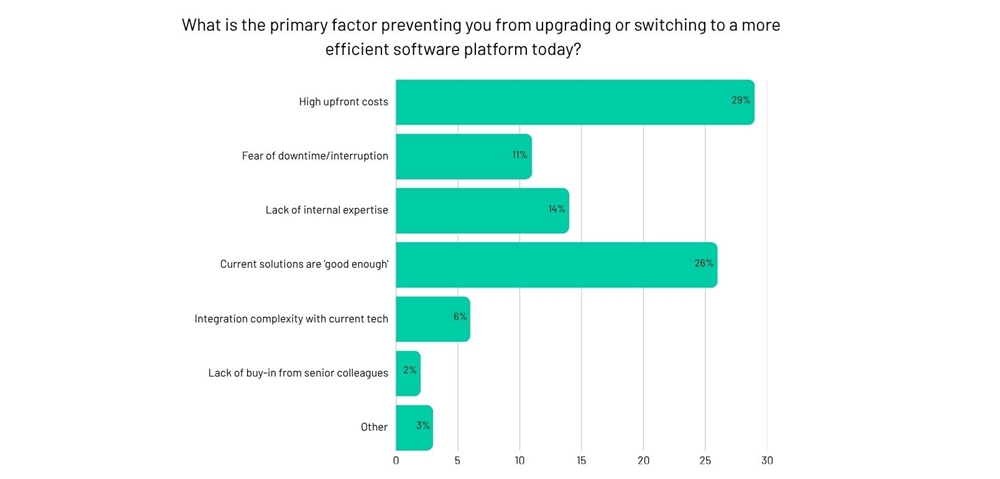
26% of businesses say their current software is “good enough”, stopping them from moving to more efficient tools. This suggests many are sticking with familiar systems rather than looking for options that better suit their needs.
Choosing a provider that fits how the business actually operates can make a big difference to long-term performance.
2. Understand the full cost
When switching software, it is important to look beyond the subscription fee.
SMB leaders may underestimate the migration costs and not take into account setup fees, data migration and other hidden costs which can quickly add up.
Without a clear view of the total cost, businesses risk unexpected expenses and may exceed the budget.
3. Plan for implementation time
While some disruption is expected, poor planning can lead to unnecessary delays and damage expected ROI. 11% of SMBs say fear of downtime or disruption stops them from upgrading their systems.
Allowing time for implementation and putting the right support in place can help keep business running smoothly.
4. Ensure your team is prepared
Even with the most efficient software in place, it might not be used effectively if the team doesn’t know how to use it.
Giving staff enough time and training to fully understand and adapt to the new software can help businesses to fully benefit from the new technology.
5. Monitor integration issues
If new tools don’t work well with existing systems, they could create more manual work rather than less.
Expert Market’s data shows that 6% of SMBs say integration issues with their current tech prevent them from switching to more efficient software.
Avoid unnecessary disruption and maximise productivity by ensuring that the new software works well with existing systems that are being used.
6. Consider long-term value
29% of U.S. SMBs say high upfront costs prevent them from switching to more efficient software. But focusing on these costs can lead businesses to miss out on tools that could deliver better value over time.
Looking at long-term savings and efficiency gains gives a clearer picture of whether a switch is worthwhile.
Editor of Expert Market, Chris Maillard, comments:
“Doing detailed research into new technology, including talking to existing users and informed industry experts, will avoid unforeseen costs, extra staff time and other negative consequences further down the line. There are great tech solutions out there, but making sure they’re right for your business is a job where there are no shortcuts.”