
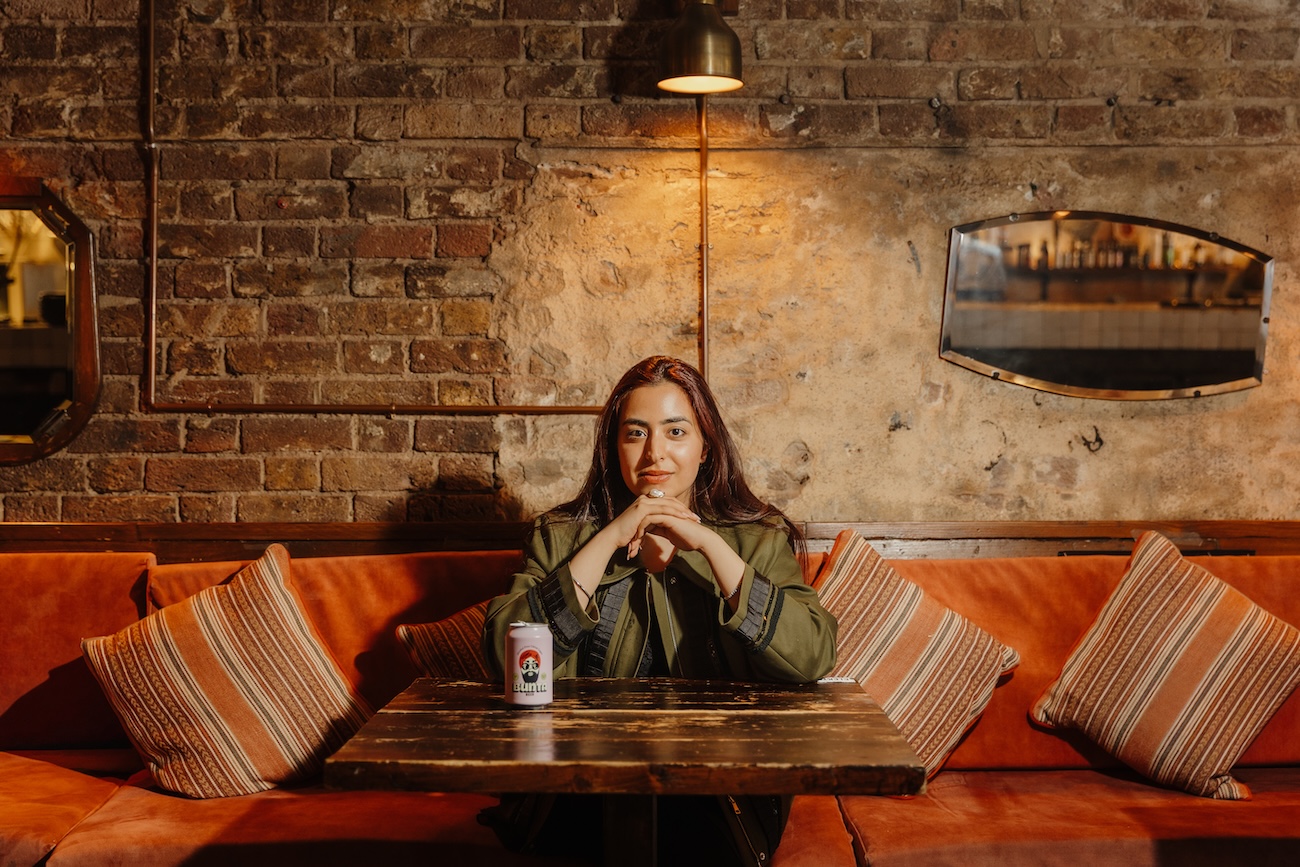
SME Today had the opportunity to sit down with Gunikka Ahuja, Founder of Bunta Beer, to discuss her transition from a six‑figure role at Adidas to building a brand at the intersection of food, culture and innovation. In this Q&A, Ahuja opens up about spotting a gap in the market, taking the leap into entrepreneurship, and redefining the role of beer alongside Indian cuisine.
- You walked away from a successful six-figure career at Adidas to launch Bunta Beer. What
 was the moment you realised the opportunity was too compelling to ignore?
There wasn’t one single moment. It was more like a slow accumulation of frustration that eventually became impossible to ignore. I’d grown up eating incredible Indian food, and every time I sat down to a curry, the beer options felt completely disconnected from the experience. You’d have a beautifully crafted dish – layers of spice, citrus, coriander and the only thing on the table was a generic lager that did nothing for it. I kept waiting for someone to solve this. Eventually I realised that if I was waiting, probably a lot of other people were too. That’s when it stopped being an observation and started being an obligation.
- Many people dream of starting a business but never take the leap. How did you assess the risks of leaving a stable corporate career, and what gave you the confidence to do it?
I won’t pretend the risk wasn’t real. A corporate salary, a title, a clear career ladder – those things are genuinely comfortable, and comfort is hard to walk away from. What helped me was reframing the question. Instead of asking “what do I lose if this fails?”, I started asking “what do I lose if I never try?” The answer to that second question was far more frightening. I also took the decision seriously rather than romantically: I stress-tested the market, talked to people across the hospitality industry, and looked hard at whether there was a genuine commercial case. Confidence didn’t come from certainty; it came from doing the work and deciding the evidence was compelling enough to act on.
- You often say that “Indian food deserves better beer.” What gap in the market did you identify, and why do you think it had been overlooked for so long?
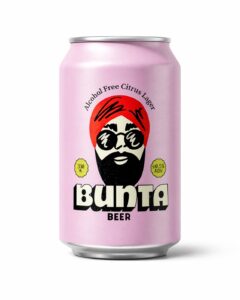
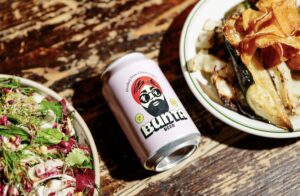
The gap is cultural as much as it is commercial. Indian food in the UK has undergone a genuine renaissance chefs like Vivek Singh, Romy Gill, Sameera Taneja, Deepana Anand and the whole movement of modern Indian restaurants have completely transformed what people expect from the cuisine. But the drinks pairing conversation never caught up. Wine lists evolved, cocktail menus got inventive, but beer stayed generic. I think it was overlooked partly because it required someone to sit at the intersection of two worlds deep cultural knowledge of South Asian food and a genuine understanding of brewing and flavour. Bunta is brewed specifically with orange peel and coriander seed to work with spice rather than against it. That specificity is what makes it different, and it’s the kind of insight that comes from lived experience, not a market research report.
- Your background is in textile technology and innovation rather than brewing. How has your experience at Adidas influenced the way you’ve developed products and built the business?
More than people might expect. At Adidas, innovation wasn’t just about the product, it was about understanding what a consumer actually experiences and building backwards from that moment. I learned to ask: what problem are we really solving, and for whom? That discipline transferred directly to Bunta. I didn’t approach it as a brewing project; I approached it as a design and innovation challenge. What does the ideal drinking experience alongside a curry feel like? What flavours need to be present, and what needs to be absent? The brewery partnership came after the brief was clear. I also learned at Adidas that brand and product have to be inseparable – you can’t build lasting commercial value on product alone, and you can’t sustain a brand without product substance behind it.
- Developing a new beverage is rarely straightforward. What were some of the biggest challenges you faced in bringing Bunta Beer from concept to commercial reality?
The hardest part was the gap between “this tastes right to me” and “this will scale commercially and consistently.” 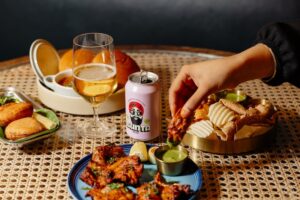 Getting the balance of orange peel and coriander seed right present enough to complement spice but not so dominant it becomes a novelty took far more iteration than I anticipated. Then there’s the regulatory side, labelling, distribution logistics, managing lead times as a solo founder with no operational team. You go from thinking about flavour profiles to filling in compliance paperwork in the same afternoon. The non-alcoholic category adds another layer because the production process itself is more complex than standard brewing. Every challenge was solvable, but the accumulation of them with no one to share the load tests you in ways corporate life simply doesn’t.
- Consumer attitudes towards alcohol-free drinks have changed dramatically in recent years. What trends are you seeing in the market, and where do you think the category is heading next?
The biggest shift is that people have stopped apologising for choosing non-alcoholic drinks. It used to carry a social stigma you were assumed to be pregnant, driving, or in recovery. Now it’s just a preference, and a genuinely sophisticated one. The category is growing quickly, but most of it is still built around replication trying to make something that tastes as close as possible to its alcoholic equivalent. I think the next wave will be about creation drinks designed from the ground up for specific occasions, flavour pairings, or cultural contexts. Bunta isn’t trying to be a pale imitation of a standard lager. It’s trying to be the best possible drink for a specific moment. That’s where the real differentiation will come from across the category.
- Since launching in 2025, Bunta has secured listings in more than 40 restaurants and venues. What strategies have been most effective in winning over buyers and building credibility as a new brand?
Relevance and specificity. I’ve never walked into a pitch and said “we’re a great non-alcoholic beer.” I walk in and say “you serve incredible Indian food, and right now there is nothing on your drinks list that was designed for it.” That framing changes the conversation immediately. It’s not a product sale, it’s a gap-fill for something the buyer already cares about. Early credibility came from quality signals: winning Gold at the London Beer Competition gave buyers external validation before we had volume to point to. And getting the right early accounts restaurants with genuine reputations for food quality created a halo effect. If Bunta is good enough for Kricket, it’s a credible conversation starter anywhere.
- Social media appears to have played a major role in your growth. How have platforms such as Instagram and TikTok helped you build awareness and generate sales opportunities?
Social has been essential, but I’ve been deliberate about what I’m actually building there. It’s not just awareness, it’s trust and context. People don’t just buy a product; they buy into the founder and the story behind it. When I share content about why Bunta exists, what British-Indian food culture means to me, or what the reality of building this solo actually looks like, it creates a relationship that a press release never could. Instagram has been particularly important for reaching the hospitality community buyers, sommeliers, food journalists who are genuinely active there. The lesson I’d share is that consistency matters far more than virality. Showing up with a clear point of view, repeatedly, compounds over time.
- As a founder, what has been the biggest surprise you’ve encountered since moving from corporate life into entrepreneurship?
How much of the job is emotional management. In a corporate role, there are structures, teams, and processes that absorb a lot of the uncertainty. As a solo founder, every decision lands on you and so does every setback. I was prepared for the workload. I wasn’t fully prepared for how personal it would feel when things didn’t go to plan, or how much energy it takes to maintain conviction on difficult days. The flip side is that the highs are incomparable. When a head chef tells you Bunta is the only thing on the menu that actually works with their food, that lands differently when it’s your name on the bottle.
- As a founder, what has been the biggest surprise you’ve encountered since moving from corporate life into entrepreneurship?
How much of the job is emotional management. In a corporate role, there are structures, teams, and processes that absorb a lot of the uncertainty. As a solo founder, every decision lands on you and so does every setback. I was prepared for the workload. I wasn’t fully prepared for how personal it would feel when things didn’t go to plan, or how much energy it takes to maintain conviction on difficult days. The flip side is that the highs are incomparable. When a head chef tells you Bunta is the only thing on the menu that actually works with their food, that lands differently when it’s your name on the bottle.
- What advice would you give to professionals considering leaving established careers to pursue a business idea they believe in?
Do the intellectual work before you do the emotional leap. Passion is necessary but not sufficient, you need to be able to articulate who your customer is, why they’d choose you over what exists, and how you’d reach them. If you
can’t answer those questions clearly, spend more time in research before you resign. But equally don’t use preparation as a way to avoid the risk indefinitely. There’s a point at which you have enough information to make a considered decision, and staying beyond that point is usually fear dressed up as diligence. Know the difference.
- Looking ahead, what is your vision for Bunta Beer over the next three to five years, and what opportunities excite you most?
The immediate focus is depth before breadth building genuinely strong commercial relationships with the right restaurants and retail partners in the UK, and becoming the default choice when someone is pairing a drink with South Asian or spicy food. Beyond that, the export opportunity is significant. South Asian diaspora communities are large, food-engaged, and underserved by drinks brands that reflect their culture in the US, Canada, Australia, and across Europe. There’s also a broader conversation happening about cultural specificity in food and drink, and Bunta is well-positioned as that conversation grows. The vision isn’t to be the biggest non-alcoholic beer. It’s to be the most culturally meaningful one.
- You walked away from a successful six-figure career at Adidas to launch Bunta Beer. What was the moment you realised the opportunity was too compelling to ignore?
There wasn’t one single moment. It was more like a slow accumulation of frustration that eventually became impossible to ignore. I’d grown up eating incredible Indian food, and every time I sat down to a curry, the beer options felt completely disconnected from the experience. You’d have a beautifully crafted dish – layers of spice, citrus, coriander and the only thing on the table was a generic lager that did nothing for it. I kept waiting for someone to solve this. Eventually I realised that if I was waiting, probably a lot of other people were too. That’s when it stopped being an observation and started being an obligation.
- Many people dream of starting a business but never take the leap. How did you assess the risks of leaving a stable corporate career, and what gave you the confidence to do it?
I won’t pretend the risk wasn’t real. A corporate salary, a title, a clear career ladder – those things are genuinely comfortable, and comfort is hard to walk away from. What helped me was reframing the question. Instead of asking “what do I lose if this fails?”, I started asking “what do I lose if I never try?” The answer to that second question was far more frightening. I also took the decision seriously rather than romantically: I stress-tested the market, talked to people across the hospitality industry, and looked hard at whether there was a genuine commercial case. Confidence didn’t come from certainty; it came from doing the work and deciding the evidence was compelling enough to act on.
- You often say that “Indian food deserves better beer.” What gap in the market did you identify, and why do you think it had been overlooked for so long?
The gap is cultural as much as it is commercial. Indian food in the UK has undergone a genuine renaissance chefs like Vivek Singh, Romy Gill, Sameera Taneja, Deepana Anand and the whole movement of modern Indian restaurants have completely transformed what people expect from the cuisine. But the drinks pairing conversation never caught up. Wine lists evolved, cocktail menus got inventive, but beer stayed generic. I think it was overlooked partly because it required someone to sit at the intersection of two worlds deep cultural knowledge of South Asian food and a genuine understanding of brewing and flavour. Bunta is brewed specifically with orange peel and coriander seed to work with spice rather than against it. That specificity is what makes it different, and it’s the kind of insight that comes from lived experience, not a market research report.
- Your background is in textile technology and innovation rather than brewing. How has your experience at Adidas influenced the way you’ve developed products and built the business?
More than people might expect. At Adidas, innovation wasn’t just about the product, it was about understanding what a consumer actually experiences and building backwards from that moment. I learned to ask: what problem are we really solving, and for whom? That discipline transferred directly to Bunta. I didn’t approach it as a brewing project; I approached it as a design and innovation challenge. What does the ideal drinking experience alongside a curry feel like? What flavours need to be present, and what needs to be absent? The brewery partnership came after the brief was clear. I also learned at Adidas that brand and product have to be inseparable – you can’t build lasting commercial value on product alone, and you can’t sustain a brand without product substance behind it.
- Developing a new beverage is rarely straightforward. What were some of the biggest challenges you faced in bringing Bunta Beer from concept to commercial reality?
The hardest part was the gap between “this tastes right to me” and “this will scale commercially and consistently.” Getting the balance of orange peel and coriander seed right present enough to complement spice but not so dominant it becomes a novelty took far more iteration than I anticipated. Then there’s the regulatory side, labelling, distribution logistics, managing lead times as a solo founder with no operational team. You go from thinking about flavour profiles to filling in compliance paperwork in the same afternoon. The non-alcoholic category adds another layer because the production process itself is more complex than standard brewing. Every challenge was solvable, but the accumulation of them with no one to share the load tests you in ways corporate life simply doesn’t.
- Consumer attitudes towards alcohol-free drinks have changed dramatically in recent years. What trends are you seeing in the market, and where do you think the category is heading next?
The biggest shift is that people have stopped apologising for choosing non-alcoholic drinks. It used to carry a social stigma you were assumed to be pregnant, driving, or in recovery. Now it’s just a preference, and a genuinely sophisticated one. The category is growing quickly, but most of it is still built around replication trying to make something that tastes as close as possible to its alcoholic equivalent. I think the next wave will be about creation drinks designed from the ground up for specific occasions, flavour pairings, or cultural contexts. Bunta isn’t trying to be a pale imitation of a standard lager. It’s trying to be the best possible drink for a specific moment. That’s where the real differentiation will come from across the category.
- Since launching in 2025, Bunta has secured listings in more than 40 restaurants and venues. What strategies have been most effective in winning over buyers and building credibility as a new brand?
Relevance and specificity. I’ve never walked into a pitch and said “we’re a great non-alcoholic beer.” I walk in and say “you serve incredible Indian food, and right now there is nothing on your drinks list that was designed for it.” That framing changes the conversation immediately. It’s not a product sale, it’s a gap-fill for something the buyer already cares about. Early credibility came from quality signals: winning Gold at the London Beer Competition gave buyers external validation before we had volume to point to. And getting the right early accounts restaurants with genuine reputations for food quality created a halo effect. If Bunta is good enough for Kricket, it’s a credible conversation starter anywhere.
- Social media appears to have played a major role in your growth. How have platforms such as Instagram and TikTok helped you build awareness and generate sales opportunities?
Social has been essential, but I’ve been deliberate about what I’m actually building there. It’s not just awareness, it’s trust and context. People don’t just buy a product; they buy into the founder and the story behind it. When I share content about why Bunta exists, what British-Indian food culture means to me, or what the reality of building this solo actually looks like, it creates a relationship that a press release never could. Instagram has been particularly important for reaching the hospitality community buyers, sommeliers, food journalists who are genuinely active there. The lesson I’d share is that consistency matters far more than virality. Showing up with a clear point of view, repeatedly, compounds over time.
- Bunta sits at the intersection of food, culture and innovation. How important has storytelling been in building the brand, and what lessons can other SMEs learn from your approach?
Storytelling isn’t a marketing tactic for Bunta – it’s the foundation. The beer makes commercial sense, but the reason people care is because there’s something true and specific behind it. I grew up eating the food that Bunta is made for, and I’m the first woman in my family to own a business. That’s not a brand strategy, it’s just my life. The lesson for other founders is to resist the temptation to generalise. The more specific and honest you are about why you built something, the more resonant it becomes. Specific truths travel further than you’d expect.
- As a founder, what has been the biggest surprise you’ve encountered since moving from corporate life into entrepreneurship?
How much of the job is emotional management. In a corporate role, there are structures, teams, and processes that absorb a lot of the uncertainty. As a solo founder, every decision lands on you and so does every setback. I was prepared for the workload. I wasn’t fully prepared for how personal it would feel when things didn’t go to plan, or how much energy it takes to maintain conviction on difficult days. The flip side is that the highs are incomparable. When a head chef tells you Bunta is the only thing on the menu that actually works with their food, that lands differently when it’s your name on the bottle.
- What advice would you give to professionals considering leaving established careers to pursue a business idea they believe in?
Do the intellectual work before you do the emotional leap. Passion is necessary but not sufficient, you need to be able to articulate who your customer is, why they’d choose you over what exists, and how you’d reach them. If you can’t answer those questions clearly, spend more time in research before you resign. But equally don’t use preparation as a way to avoid the risk indefinitely. There’s a point at which you have enough information to make a considered decision, and staying beyond that point is usually fear dressed up as diligence. Know the difference.
- Looking ahead, what is your vision for Bunta Beer over the next three to five years, and what opportunities excite you most?
The immediate focus is depth before breadth building genuinely strong commercial relationships with the right restaurants and retail partners in the UK, and becoming the default choice when someone is pairing a drink with South Asian or spicy food. Beyond that, the export opportunity is significant. South Asian diaspora communities are large, food-engaged, and underserved by drinks brands that reflect their culture in the US, Canada, Australia, and across Europe. There’s also a broader conversation happening about cultural specificity in food and drink, and Bunta is well-positioned as that conversation grows. The vision isn’t to be the biggest non-alcoholic beer. It’s to be the most culturally meaningful one.