
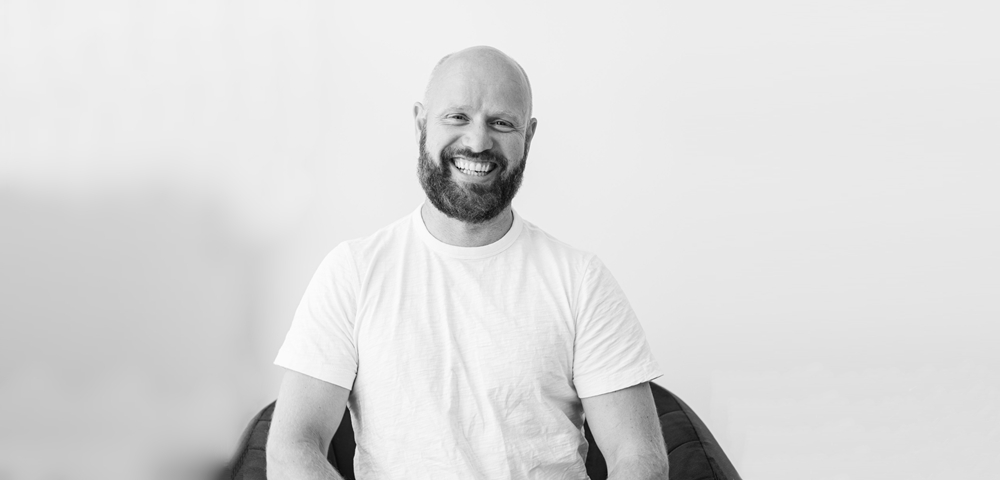
In this interview with SME Today magazine, Simon Shaw, CEO of London-based audience tech and media services company Fifty, explores how the high-stakes world of international sailing shaped his approach to leadership and recounts Fifty’s evolution from a garage experiment into a leading audience intelligence platform.
- What does Fifty do?
Fifty is an audience technology and media and marketing solutions company. For the past decade, it has used open-source, non-PII data from the web, social media and the wider digital ecosystem to understand the real audiences behind brands and organisations.
The company combines human insight with AI-powered simulation to help brands understand not just who their audiences are, but how they think, feel and behave. This allows organisations to move beyond demographics and into real behavioural understanding. Fifty has also developed AI-enabled media and marketing solutions that help brands reach and engage those audiences more effectively.
- How did you start your business?
I’m not a marketer by trade, I’m a professional sailor who has competed at the highest level of the sport, including America’s Cups and World Championships. It meant for about a decade after leaving university I worked as an athlete testing high-performance craft and analysing data to find ways to optimise performance.
At the same time, social media was emerging as a major new data source. We started experimenting with how data at scale could help us understand our audiences better. But that quickly evolved when businesses started asking us to do the same for them. That was really the moment the business was born.
We started in a garage at the back of my house. I hired our first team member, who is still connected to the business today in a consultancy capacity. We then brought in our CTO Jamie, who came from Government data science. I funded the early years myself while still competing as an athlete. Those were tough years, but they built the foundations for everything that followed.
- How do you evaluate the ups and downs of your business?
I still see the business through the lens of a sporting team rather than a corporate organisation. I don’t come from a corporate background, so I think of it as a group of people working towards a shared goal, and ultimately that goal is to win and be the best we can be.
We’ve had periods of strong growth, at one point doubling year on year, although that’s not something you can sustain indefinitely. We’ve also had investment, which has helped fuel that growth. But ultimately, growth is a byproduct of building technology that works and delivers outcomes.
The last five years have been the most challenging, but also the most rewarding. COVID had a major impact, especially in travel, tourism and entertainment, which were key sectors for us. In some cases, demand disappeared overnight.
We had to rebuild and reposition the business several times. What carried us through was the flexibility of our product and the strength of our team. Today, we’re in a much stronger position. We’ve emerged with a more resilient business, a broader client base and a clearer proposition, and we’re growing again with real confidence in where we’re headed.
- What are the biggest challenges of being an entrepreneur?
I love being an entrepreneur, but the biggest challenge is that you are always on. There is no switch-off point. Even when you’re away, you still find yourself checking in, and nothing ever feels finished.
There is also the constant need to keep everything moving. If you step back too far, things slow down quickly.
It feels like pedalling a bike with the brakes slightly on. You are always moving forward, but there is no moment where you can fully coast. It’s similar to sport in that there is no hiding place and performance is always visible.
The emotional highs and lows are real. But I wouldn’t change it. I don’t think I would make a very good employee, which is probably why I ended up as a CEO. I’m also lucky to work with a strong team who complement my weaknesses and allow me to focus on where I add value.
- How do you handle stress and pressure?
I think of it as pressure rather than stress. Pressure can be managed.
Unlike sport, where decisions are instantaneous, business gives you time to think. You can step back, reflect and make more considered decisions. Over time, I’ve developed a few habits that help me manage it.
Running is important. It helps clear my head and organise my thinking. Preparation also matters. If you’ve thought something through properly, you are better equipped to deal with pressure.
But perspective is key. Things are rarely as good or as bad as they seem. Staying grounded and keeping a sense of humour helps.
- What’s your definition of success?
A friend once told me that organisations are rarely static. They are either getting better or getting worse.
That has always stuck with me. So, I measure success by whether we are improving across the key parts of the business. If we can keep making small, consistent gains, that is success.
- How did you win over your first customers, investors and partners?
A lot of it comes down to value exchange and trust. We’ve always invested early in people and given them real responsibility. We have people who started as interns and are now in leadership roles. A number of our early hires are still with us more than a decade later.
For customers and investors, I see them as part of the same ecosystem. We’ve always had a very tangible product. We show brands their audiences in a clear, visual way, so the value is immediately obvious. Rather than relying on pitch decks, we demonstrate the platform working.
One of our first major customers was Red Bull in the UK. They were already highly advanced in data-driven marketing, so they immediately understood the value. That relationship led to our first investors. What won people over was validating what they already knew while also showing them what they were missing.
- What’s your most satisfying entrepreneurial moment so far?
It’s still surreal to think the business started in a garage at the back of my house with a makeshift desk and printer.
Seeing something that began like that now operating globally, with people building their careers around it, is probably the most meaningful part. The milestones along the way include closing our first investment round in 2019 with Guinness, which enabled us to scale properly, and reaching profitability in 2025 while continuing that growth trajectory.
More recently, seeing our platform evolve into what we call “Living Intelligence”, where it interacts with audiences in real time, has been a major step change.
- What is your company culture and how do you encourage it?
We build our culture around a set of values that we actively measure and reinforce.
High performance is the foundation. We focus on outcomes and delivering real impact. Innovation is equally important, but it only happens when people have the space to think, experiment and improve.
Partnership sits at the heart of how we work. We look for people who are fully committed, support one another and are willing to go the extra mile.
Underpinning everything are respect, trust and integrity. The goal is to create an environment where people can perform at their best and sustain that performance over the long term, not burn themselves out.
- How do you plan to grow your business?
Growth is something we think about constantly. In 2025, our technology made a significant step forward, allowing us to work with larger and more complex organisations. We are investing in commercial capability and becoming more proactive in how we go to market.
More broadly, organisations are looking for new ways to use AI and data to drive outcomes, not just efficiency. Our focus is on turning slow, manual processes into near-instant capabilities using AI and data. That is what will drive the next phase of growth.