
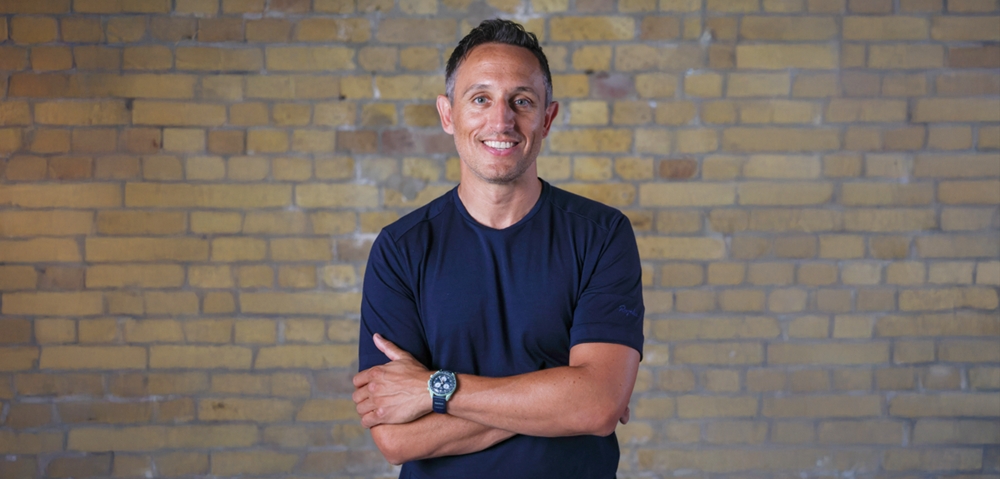
Q: Matt, tell us a bit about your background and how you came to co-found &together.
A: We believe, really passionately, that financial planning done properly, is the biggest lever for changing people’s lives.
At the same time, we both felt that entrepreneurs are misunderstood and underserved by traditional advice.
We started &together to bring those two things together: world-class, evidence-based financial planning, built specifically for founders.
Between us, we’ve spent 35 years in asset management, including 22 at Vanguard, one of the world’s largest and most respected investment firms. Over that time, we developed deep expertise in investment strategy, portfolio construction and the evidence-based principles that truly drive long-term success.
We also worked with hundreds of financial advice firms across the UK, the U.S. and Europe, giving us a rare view into how both boutique planning firms and the world’s biggest private banks operate. After two decades inside the industry, seeing what works and what doesn’t, one truth became clear: the best financial planning is behaviour-led, deeply personal, aligned to a client’s values and simple!
So we built &together to be the firm we’d always wanted ourselves: owner-led, independent, holistic, common-sense investing, fair fees and relentlessly focused on founders.
Q: Your mission centres on helping founders avoid the ‘single stock trap’. What do you mean by that?
A: Most founders have nearly all of their wealth tied up in their business! They’ve essentially created a 100% single-stock portfolio, one where their entire financial future hinges on a single asset and a single outcome – the sale of their business.
It’s incredibly common. In the early years, the business is usually unpredictable. Cash flows are lumpy, and every available pound understandably goes back into growth. Most founders keep a lot of cash in the company to safeguard against downturns – which, at that stage, is often the right thing to do.
But the problem is what happens as the business matures. Revenues stabilise, profits grow, yet many entrepreneurs continue behaving as though they’re still in the early-stage survival cycle. They don’t diversify. They don’t invest outside the business. And over time, this creates enormous financial vulnerability.
Q: Why does this become such a high-risk situation for business owners?
A: Because their personal financial success becomes dependent on a single event: a successful exit.
If the valuation doesn’t meet expectations, they’re exposed. If the market dips the year they want to sell, they’re exposed. If they’re locked into an earn-out – which is increasingly common – and suddenly find themselves working for someone else with very little control, they’re exposed.
And there’s a second layer to this: in many families, the founder isn’t the only one financially dependent on the business. Often the spouse also works in the company or can’t pursue a career because of the founder’s schedule. So now the whole family’s security depends on the business performing perfectly for a decade or more. It becomes a very high-stakes situation.
Q: You’ve said before that long-term financial success is based on a simple equation. Can you explain that?
A: People tend to think investing is all about picking the right stocks or getting the timing perfect. It’s not.
The real drivers of long-term success are simple: high savings rate, a diversified liquid portfolio, low costs, and time = financial success.
That’s it. The challenge for founders is that if everything is tied up in the business, they don’t get to apply this equation to their personal finances. They have no diversified investments compounding in the background. And they miss out on the two most powerful levers they have: time and consistency.
Q: How can founders start to escape the single stock trap? What’s the first step?
A: The first step is to recognise that the business is not the plan. It’s an asset – an important one – but not a financial plan in itself.
From there, it’s about intentionally shifting from “all-in on the business” to building a diversified personal balance sheet. That usually means:
- Pulling some value out of the business earlier than you think you ‘should’.
- Starting to invest regular amounts, even modest ones, in a globally diversified portfolio.
- Creating a clear plan that maps to your personal goals, not just the business’s trajectory.
Engaging early makes an enormous difference. Starting five years earlier can be life-changing because you benefit from time – a founder’s most scarce resource!
Q: What role does &together play in helping entrepreneurs make those changes?
A: &together was designed specifically for founders and entrepreneurs. They face different risks and opportunities, and their financial lives simply don’t look like those of salaried professionals.
We give founders a structured way to translate business success into long-term financial security, to build wealth outside the business, reduce risk, and ultimately create real financial independence.
Importantly, we’re built on alignment. There are no product sales, no commissions, no unnecessary complexity. We focus on planning, evidence, and helping founders build the diversified personal wealth they need to enjoy the freedom they’ve spent years working for.
Q: What’s the most rewarding part of this work for you?
A: For me, the real reward is helping founders reach financial freedom – because freedom creates choice. Choice in how they work, when they work, and ultimately what happens to the business they’ve spent years building. When money is no longer the dictator, they get to decide.