
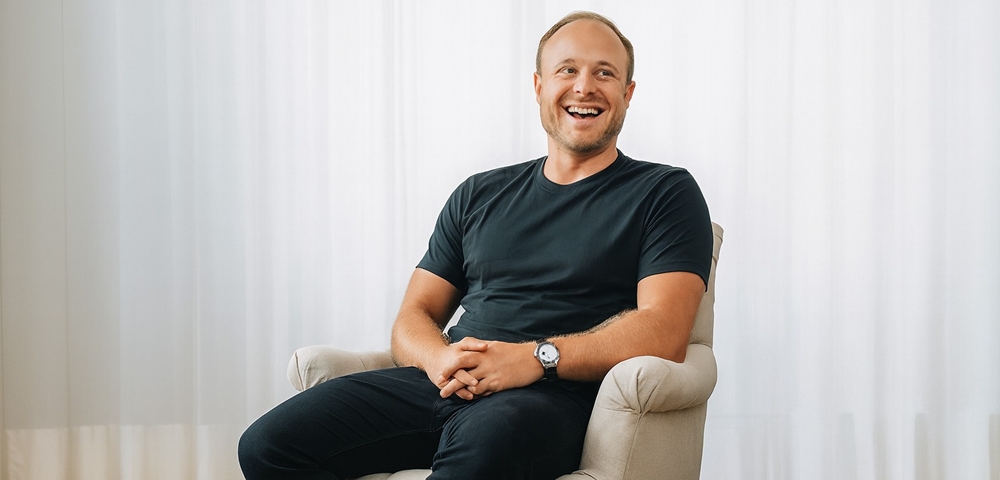
How did you start your business?
The truth is, it actually started as a side hustle. I initially had a business partner, I knew I wanted to do this full time, but he wasn’t as enthusiastic so I took it from there. We’re now entering our 10th year, which is cool.
The truth is, it actually started as a side hustle. I initially had a business partner, I knew I wanted to do this full time, but he wasn’t as enthusiastic so I took it from there. We’re now entering our 10th year, which is cool.
How do you evaluate the past ups and downs of your business?
It’s definitely a roller coaster. If you think it’s going to be plain sailing, that’s not the case. But when you’ve got a long-term vision and a long-term goal, you know it’s a journey. Some people see it as a game, some see it as a journey. I do quite like the idea of it being part of the game. You win some, you lose some. Over time, you do become a bit desensitised to both the wins and the losses, because you’ve been through it before.
It’s definitely a roller coaster. If you think it’s going to be plain sailing, that’s not the case. But when you’ve got a long-term vision and a long-term goal, you know it’s a journey. Some people see it as a game, some see it as a journey. I do quite like the idea of it being part of the game. You win some, you lose some. Over time, you do become a bit desensitised to both the wins and the losses, because you’ve been through it before.
One of the biggest things I didn’t do early in my career, but try to do now, is look after myself first. I’m still not all the way there, but getting your sleep right, your diet right, doing what you love, and moving your body, whether that’s wellness, health, or fitness, is really important. Looking after those things helps you perform better in your business day to day.
What is a typical day like for you?
Most days are pretty back to back. I usually try to get a workout or a padel game in first thing. I’m not naturally a morning person, but I’ve trained myself to get up early, otherwise the day just gets away from me.
Most days are pretty back to back. I usually try to get a workout or a padel game in first thing. I’m not naturally a morning person, but I’ve trained myself to get up early, otherwise the day just gets away from me.
I don’t usually take external meetings before 10:30am. When I first get in, it’s typically a meeting with my EA, catching up on anything urgent, and responding to the team internally. Occasionally I’ll do a power breakfast with a big client, but generally I try to keep the early part of the morning clear.
Between about 11am and 3pm is when most external meetings happen. This week I’ve been seeing a lot of new businesses that want to work with us. I try to step out of the office to grab lunch, although that doesn’t always happen.
The rest of the day is usually a mix of internal meetings, management meetings with direct reports, and meetings with larger external clients that I have relationships with. Internally we have a bit of a cadence. Mondays are typically bigger team meetings and Fridays we have a full agency meeting.
As CEO, though, I’m not always on the same cadence as the rest of the business. The main thing that disrupts it is travel. When I’m travelling internationally, you’re often just scrambling to get things done on the road. Interestingly, I tend to get a lot more administrative work done when I’m away because I have fewer meetings.
What are the biggest challenges of being an entrepreneur?
Every business has similar challenges. For marketing agencies, the biggest one is usually new business and leads. We’re lucky that after almost 10 years in the market we have a strong pipeline of companies that know us and want to work with us.
Every business has similar challenges. For marketing agencies, the biggest one is usually new business and leads. We’re lucky that after almost 10 years in the market we have a strong pipeline of companies that know us and want to work with us.
That then creates the next challenge, which is delivery. Recruitment is always on our minds. We’re constantly hiring and looking for great people, people who share our values and want to progress.
There are also broader changes in the market, especially in the AI arena. On one side, we’re using AI heavily across the business for efficiency. On the other, AI visibility has actually become a service for us. We help businesses get more visibility across AI and LLM platforms, so we’re seeing both sides of that shift.
Overall though, I’m very bullish on the next few years. There will always be people starting businesses that want to grow, and we’re there to help them do that.
What’s your definition of success?
For me, success is closely linked to fulfilment. If you’re focused and passionate about what you’re doing, and you feel like you’re progressing and learning, that’s a big part of it. Keeping that sense of curiosity is important.Happiness as a feeling comes and goes. You can be unhappy at times but still feel fulfilled. I think striving for fulfilment and purpose is more important.
For me, success is closely linked to fulfilment. If you’re focused and passionate about what you’re doing, and you feel like you’re progressing and learning, that’s a big part of it. Keeping that sense of curiosity is important.Happiness as a feeling comes and goes. You can be unhappy at times but still feel fulfilled. I think striving for fulfilment and purpose is more important.
I speak to a lot of people who have seemingly achieved everything in their field, but if they lack purpose, that can really drain their sense of success. There are also many different forms of success. I have friends raising children who I see as hugely successful in what they do, and I know business leaders who I also see as very successful. It can take many forms.
How did you win over your first customers, investors or business partners?
Initially it was all about relationships, showing up and demonstrating value upfront. It can be difficult, especially now. In our industry, the barriers to entry are quite low, so at the lower end you’re competing with a lot of people who may or may not be very good at what they do.
Initially it was all about relationships, showing up and demonstrating value upfront. It can be difficult, especially now. In our industry, the barriers to entry are quite low, so at the lower end you’re competing with a lot of people who may or may not be very good at what they do.
Ultimately, though, sales and winning clients is a numbers game.
What’s your most satisfying entrepreneur moment so far?
For me it usually comes from the team. I have very high standards for myself, so when I go into a meeting I expect to win and close the deal.
For me it usually comes from the team. I have very high standards for myself, so when I go into a meeting I expect to win and close the deal.
But I had a message this morning from someone in the team, not even someone particularly senior, who had closed a new piece of business from a company that approached us. It was quite a difficult pitch process. That kind of thing fires me up more than the wins I get for myself.
It’s also incredibly satisfying seeing our clients succeed. We’ve worked with a lot of businesses for many years and helped take them from zero to significant scale. There’s a misconception in marketing that your actions don’t have a real impact, but they absolutely do. We’ve had a real impact on a lot of people’s businesses and lives, and I’m very proud of that.
What are your daily habits for connecting with your team?
We’re in the office most of the week. Most of the team work from home one day a week, although not everyone, but generally we’re together in the office. Clients are also in and out regularly, so we’re constantly interacting across the room.
We’re in the office most of the week. Most of the team work from home one day a week, although not everyone, but generally we’re together in the office. Clients are also in and out regularly, so we’re constantly interacting across the room.
For external communication with clients, partners, and suppliers around the world we use tools like Slack, and generally far fewer emails.
We’re quite call first as a culture. If something needs to be discussed, we ask whether we can meet or call first, and only message if that isn’t possible. In marketing, a lot of agencies hide behind direct messages or email, but you lose a lot of context and energy that way. We’re a very high-touch agency, both with our clients and internally as a team.
How do you plan to grow the business going forward?
We’re going to continue doing what we’re doing, expanding our service lines and hiring new people.
We’re going to continue doing what we’re doing, expanding our service lines and hiring new people.
Ultimately, we’re here to help businesses grow their revenue, and we already represent some of the highest-growth brands not just in the UK but across Europe, the US, and globally. We’ll keep innovating to make sure we remain the go-to partner for those types of businesses.
One thing that’s important in the agency world is that a lot of the value sits in the people. The team is the value. So it’s about staying true to our values, cultivating the culture we’ve built, and continuing to grow and protect that. If we do that, we’ll continue to win.
About CEEK
Founded in 2016, CEEK is a UK-based omnichannel marketing agency helping brands increase visibility across search, social, influencer and paid media.
Headquartered in Soho, London, CEEK blends creativity, technology and strategy to deliver measurable impact, with a growing focus on AI-driven marketing visibility, ensuring brands are not only discoverable today, but positioned for how audiences will find them tomorrow.
About Charlie Terry – Founder & CEO, CEEK
A former England U19 rugby prospect, Charlie was on track to sign with Bath before injury redirected his competitive drive into business.
By 19, he had launched a headhunting office in New York, before returning to the UK to build one of the South Coast’s largest nightlife networks, running over 60 events a week. He later founded a luxury hospitality recruitment business, scaling it to £40 million turnover.
He went on to found CEEK Marketing, now one of the UK’s fastest-growing agencies, positioned at the intersection of brand marketing and AI-driven visibility.