
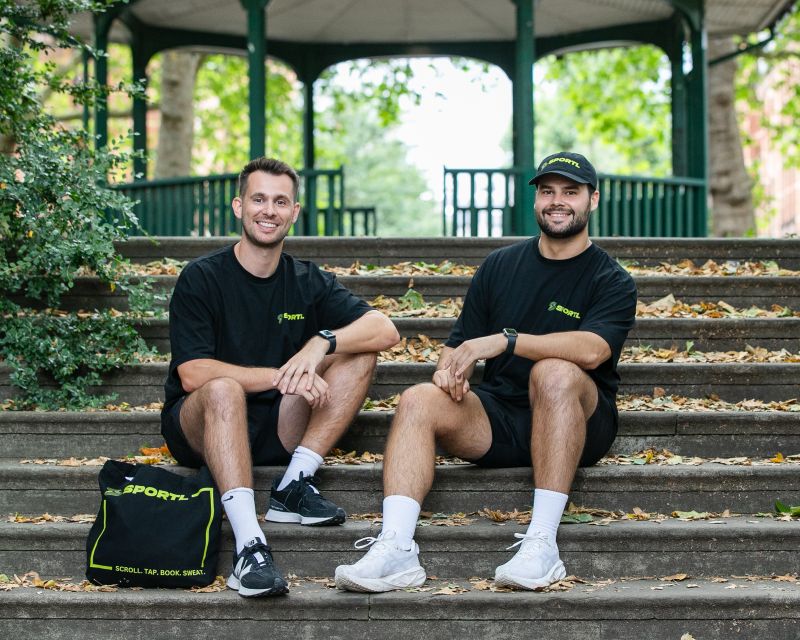
How did SPORTL start?
We first met at the Bank of England, completing our degree apprenticeships, but bonded over our interest in health and fitness amid the stresses of corporate life.
SPORTL started from a personal frustration we both experienced. In our previous corporate roles, we were travelling regularly and found ourselves paying for gym memberships we didn’t really use enough. There wasn’t a flexible fitness option that suited ourlifestyle and work commitments.
From this, the idea of SPORTL sparked, but it was only once we began speaking with many independent gym and fitness studioowners after work that we realised the scale of this idea. What started as a few conversations quickly turned into dozens, then hundreds, and a clear pattern emerged – that gym owners were struggling with existing booking platforms available as they limited their control, particularly around pricing.
We realised there was a real opportunity to build something different. A platform that worked not just for gym goers looking for flexibility, but equally for gyms and studios that wanted a fairer, more transparent way to grow their businesses. That became the foundation of SPORTL.
What makes SPORTL different from your competitors?
SPORTL is the UK’s first pay-as-you-train fitness booking platform that gives gym owners and studios full control over their own pricing and classes.
For fitness users, SPORTL offers flexibility and accessibility. Londoners can train across the city last minute, without being tied to an expensive membership that may not fit their way of life anyway.
Many existing platforms dictate pricing structures for gym/studio businesses, which can significantly reduce their revenue and limit their flexibility. Although with SPORTL, we wanted to create a model that empowers fitness owners instead of taking control away from them.
With the current rise in the cost-of-living, it is more important than ever to support local/independent gyms and studios, which is what we will always do with SPORTL.
What is a typical day like for you both?
Having known each other for years, we’ve developed a strong understanding of each other’s strengths and weaknesses, which allows us to work together and use our time wisely. Matt primarily focuses on growing partnerships and bringing gyms and studios onto the platform, whilst Ryan concentrates on developing the app and continually improving the user experience.
Alongside that, we regularly speak with our team to make sure we are on target and continue our post-launch momentum. Ultimately, no two days are ever quite the same, which is one of the things we enjoy most about building SPORTL.
What’s your definition of success?
For us, success isn’t just about scale – it’s about building something that genuinely changes the way people access fitness and the way studios grow their businesses.
In the short term, success is seeing our users book their second, third, and fourth class. That repeat behaviour tells us the product is working. On the studio side, it’s seeing owners fill classes they would otherwise have run half-empty, and doing so without giving up control of their pricing or their brand.
Longer term, success is becoming the platform that both sides of the fitness market trust – the one consumers go to first and studios choose to work with because we actually make them money rather than just taking a cut of it. If we can build that in London and then replicate it across other cities, that’s when we’ll know we’ve built something that matters.
What’s your most satisfying entrepreneurial moment so far?
Honestly, it was the moment we launched. Not because it was perfect – no launch ever is – but because after months of building, speaking to studios, refining the product and working through every obstacle that comes with starting something from scratch, we were live. Real users, real studios, real bookings.
There’s also something that’s stayed with us from the early days – sitting down with independent studio owners who told us they’d been let down by existing platforms for years and feeling like they finally had something built with them in mind. Those conversations reminded us why we started SPORTL in the first place, and that motivation hasn’t gone anywhere.
What are the biggest challenges of being an entrepreneur?
The biggest challenge, particularly as first-time entrepreneurs, is balancing speed and perfection. It is knowing when to invest in what and when without compromising financials. When you start building a business, it’s easy to overthink every detail and try to create the perfect product, have the full team in place and the office to go to. You have to be kind to yourself and your decisions, learn from them and grow. We can’t go back and undo decisions that were made, we can only but learn from them and continue to build.
Alongside that, stepping outside of your comfort zone and going all in on something new is daunting – but until you do it, you never know.
Have you ever felt unsure of a decision you made when starting a business?
Of course, every founder experiences moments of uncertainty, especially when building something for the first time.
What has helped us enormously is having a strong team and experienced people around us who can offer perspective and advice when challenges arise. Having mentors and advisors like Kevin Hewitt, James Hardy and Jamie Hearne with years of experience has been incredibly valuable throughout building SPORTL.
We have also learned that mistakes are part of building any business. The important thing is being able to learn from them quickly, adapt and keep improving.
What is your approach to company culture?
Although we are still a relatively new and small team, culture has been important to us from day one.
We want to build a business that encourages collaboration and openness. Everyone involved with SPORTL is encouraged to contribute ideas and take ownership because we believe the best businesses are built when everyone feels like they are part of the team. We also value honesty and adaptability. Start-ups move quickly, so having a team that communicates well, understands that it is not just a 9-5 job and is happy to evolve with the growing business is incredibly important.
As the company grows, maintaining that culture and sense of shared purpose will remain a major focus for us.
How do you plan on growing your business in the next 12 months?
Our goal is to become the UK’s leading fitness booking platform before expanding internationally. We are intentionally focused on London first because we believe building strong density, quality supply and consistent user habits within one major city creates the strongest foundation for long-term growth.
Our strategy is disciplined but straightforward. We want to continue building the best network of gyms and studios and create an easy-to-use booking system that encourages repeat usage and growth.
We want to change the way people access fitness by making it more flexible, fair and community-driven for everyone involved.