

Written by Tim Popiolkowski, HR Director at Blackfinch Group
Too many companies treat wellbeing as a safety net, something to catch people when they’re already struggling. But in a growing business, wellbeing can’t be a reactive, tick box exercise. It should be designed to drive performance.
Organisations are already investing heavily in employee support, often spending between £100-£200 per employee each month on benefits and wellbeing initiatives.
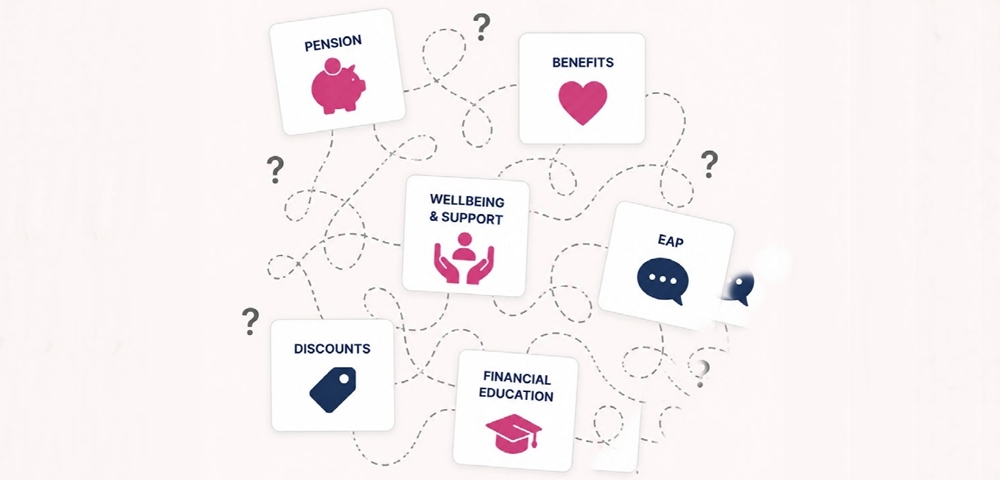
But much of that investment goes underused or fails to deliver meaningful impact because support is fragmented, difficult to access, and disconnected from what employees actually need.
The impact of getting this wrong is significant. Financial stress doesn’t stay outside the workplace. It affects focus, decision-making and performance – and 1 in 3 employees say financial stress affects their productivity at work.
Turning Wellbeing into Performance
Employee wellbeing can no longer sit on the edge of the employee value proposition. It needs to play a central role in how businesses attract talent, support performance and retain good people.
A strong wellbeing strategy should do two things: support what matters to your team and drive what matters to your business.
The right approach will look different for every organisation, but the principle is the same. Support must be easy to access, relevant to real employee needs and designed to drive meaningful outcomes.
The opportunity now is to move beyond reactive wellbeing initiatives and start building proactive strategies that support employees before issues escalate.
That means replacing fragmented support, once-a-year webinars and underused EAPs with wellbeing experiences that are embedded into everyday working life and tailored to the realities of your workforce.
Financial Stress Is a Business Performance Issue
Let’s make one thing clear. Employee financial stress is a business performance issue.
Research cited by PwC suggests that for every £1 million spent on payroll, poor financial wellbeing can be linked to an estimated 4% loss in productivity – around £40,000 in lost output for every £1 million of payroll.
The same research found that 70% of UK employees admit to losing up to a fifth of their working time worrying about their finances. Across a full working day, that equates to almost two hours of lost focus.
This is not a question of commitment or work ethic. It is about the pressure people carry through the office doors. When employees are worried about money, their ability to concentrate, engage and perform suffers.
The organisations responding best to this are not simply adding more benefits. They are making support easier to access, helping employees build financial confidence and creating strategies that actively reduce day-to-day financial stress.
The Silent Leak in your Wellbeing Strategy
Most wellbeing strategies are built with good intent. But good intent is not the same as good impact.
Employee wellbeing is still too often treated as a collection of benefits rather than something that actively supports business performance. It does not always connect clearly to the outcomes businesses care about most: stronger performance, better retention and higher engagement.
That creates a silent leak in the strategy.
Budget is being spent and support is available. But employees are not always using it, HR teams are carrying the burden of explaining it and leaders are left with little evidence that it is making a difference.
There are a few reasons this happens:
Support is too hard to find
Benefits often sit in PDFs, onboarding decks or internal portals that employees rarely revisit. Around 20% of HR leaders say employees are not aware of the benefits available to them. If people do not know support exists, it cannot change behaviour.
Programmes are built to cover the bases
Many wellbeing initiatives are added to show that something is in place. But a long list of benefits is not the same as a strategy. If support does not reflect the real pressures employees face day-to-day, it will struggle to create meaningful change.
Access creates friction
When support is difficult to understand or takes too much effort to use, employees disengage. In fact, 32% of HR leaders say benefits require too much effort for employees to use. For someone already under pressure, every extra step becomes a barrier.
Wellbeing lacks organisational buy in
Employee wellbeing is often treated as an HR initiative rather than a business-wide priority. Without visible support from leadership and buy in from managers across the organisation, wellbeing struggles to become part of everyday working culture.
People are far more likely to engage when leaders actively support it, managers reinforce it and employees see it as part of how the business operates, not just another HR programme.
The Seven Steps to a Growth-Driven Wellbeing Strategy
The organisations getting this right understand that wellbeing only creates value when employees genuinely engage with it and the business can see the impact.
Building that kind of strategy requires more than good intentions. It requires structure, consistency and leadership buy in.
1. Define the Goal
Every strong strategy starts with a clear business priority.
Is the organisation trying to reduce turnover? Support rapid growth? Improve performance? Strengthen culture? Control rising people costs?
Without that clarity, wellbeing becomes a collection of initiatives rather than a driver of business performance. The strongest strategies are aligned from day one, so every decision links back to what the business is trying to achieve.
2. Understand What Employees Really Need
Once the goal is clear, the next step is to understand where people are struggling.
Assumptions are rarely enough. Employers need to look at feedback, surveys, engagement data, absence trends and attrition patterns. These signals help identify where pressure is building, where support is missing and where existing benefits are failing to land.
Understanding these patterns early allows employers to target support where it will have the greatest impact.
3. Turn Insight into Support People Will Use
Insight only matters if it leads to action.
The goal is not to react to every issue or chase every new wellbeing trend. It is to build support that connects employee needs with business priorities.
If turnover is high, the focus may be burnout, engagement and belonging. If the business is scaling quickly, employees may need better onboarding, resilience and manager support. If performance is dipping, leaders may need to look at focus, workload, energy and financial stress.
Done well, wellbeing stops being a side initiative and instead becomes part of how the business operates.
4. Get Leaders Involved
People follow what leaders do, not what policies say.
When leaders talk about wellbeing, actively engage with support themselves and make it visible, engagement improves. But leadership alone is not enough. A strategy only sticks when it becomes part of everyday conversations.
That is where managers and wellbeing champions can play an important role. They bring support into team meetings, one-to-ones and day-to-day interactions. They help make wellbeing visible, practical and normal.
Because if wellbeing is only mentioned at launch, it will quickly fade into the background.
5. Make Support Easy to Use
If employees have to work hard to find support, they will not use it.
Most wellbeing strategies fail not because support is missing, but because employees never meaningfully engage with it.
Generic programmes are easy to ignore and complex systems create friction. When people are already under pressure, every extra step becomes a barrier.
Support needs to feel relevant, timely and simple. Clear communication, useful content and one easy place to access support all make engagement more likely.
The easier support is to understand and use, the more likely it is to become part of everyday behaviour.
6. Measure What Matters
An employee wellbeing strategy needs to demonstrate value.
Tracking logins or event attendance can be useful, but it will not tell the whole story. To prove impact, employers need to measure the outcomes that matter to the wider business.
That could include absence trends, sickness days, engagement scores, team sentiment, retention, turnover and benefit take-up.
The aim is to build a clear view of what is improving, where gaps remain and how wellbeing is supporting business goals.
When leaders can see progress, employee wellbeing stops being seen as a nice-to-have and it becomes something the business is prepared to keep backing.
7. Keep It Moving
Wellbeing is not a one-off project. It needs to evolve as the business and its people change.
Most strategies do not fail because they are wrong at launch. They fail because they lose momentum over time.
The best organisations keep talking about wellbeing, keep listening to employees and keep using data to improve what they offer.
That ongoing rhythm is what turns wellbeing from a campaign into a culture.
A growth-driven wellbeing strategy is never just about what support exists. It is about whether people understand it, trust it and use it. When that happens, wellbeing drives stronger engagement, better performance and sustainable growth.
What If I Do Nothing?
Doing nothing can feel like the safer option but in reality, it is often the most expensive choice.
When wellbeing is not structured, communicated or measured effectively, the impact rarely shows up in one place. It appears quietly across the business, through lost productivity, higher turnover and lower engagement, and compounds over time.
Financial stress is one example, but the impact extends far beyond productivity alone.
Financially stressed employees are twice as likely to be actively looking for another role. And when good people leave, replacing them can typically cost the equivalent of six to nine months’ salary.
This is why employee wellbeing cannot be separated from business performance.
Wellbeing spend should not be viewed as a cost to manage, but as an investment in the resilience, focus and performance that help businesses grow sustainably.
Elevating the Role of HR
A performance-led wellbeing strategy does more than support employees. It can also change how HR is viewed across the business. People Leaders have an opportunity to move from administrators of benefits to architects of performance.
When employee wellbeing is treated as a collection of benefits, HR is often seen as the team that manages suppliers, answers questions and responds when problems arise.
But when wellbeing is linked directly to business performance, that role becomes far more strategic.
It gives HR leaders a stronger narrative. One that connects employee financial stress, engagement and retention with the outcomes senior leaders already care about: productivity, culture, growth and cost control.
When HR can show where pressure is affecting the workforce, where support is underused and how better wellbeing can improve business outcomes, it strengthens its position at the leadership table.
In this context, HR is not simply managing benefits. It is helping shape how the business supports performance, retention and long-term growth.
Ready to build a strategy that sticks?
Turning this vision into action requires the right structure, the right tools and a practical roadmap for long-term impact.
Download “5 Practical Steps to Building an Employee Wellbeing Strategy with Thrive” to see how to bridge the gap between strategy and day-to-day execution.