

When businesses discuss the future of work, conversations often focus on recruitment trends, artificial intelligence, and attracting the right talent.
However, one of the biggest challenges facing small and medium-sized businesses often begins after hiring: managing employees, records, processes, and compliance effectively.
For many SMEs, HR administration continues to rely on spreadsheets, emails, shared folders, and multiple disconnected tools. While these methods may work for smaller teams, they can quickly become difficult to manage as a business grows.
Employee information needs to be accurate and up to date. Important documents need to be stored securely. Leave requests need to be tracked properly. Policies, records, and compliance requirements all need regular attention.
As teams expand, managing day-to-day operations becomes more complex. Businesses need to keep track of staff availability, working hours, rotas, and shift patterns while ensuring employees have clear visibility of their schedules.
Without the right systems in place, managers can spend valuable time manually creating rotas, updating schedules, handling changes, and communicating shift updates. This can lead to confusion, missed information, and unnecessary pressure on both managers and employees.
Compliance is another area where manual HR processes can create unnecessary risks. Missing documents, outdated records, inconsistent processes, or poorly managed working patterns can make it harder for businesses to demonstrate they are meeting their responsibilities.
For SMEs without dedicated HR teams, keeping track of every requirement can feel overwhelming. The challenge is not only knowing what needs to be done, but also having the right processes in place to manage it consistently.
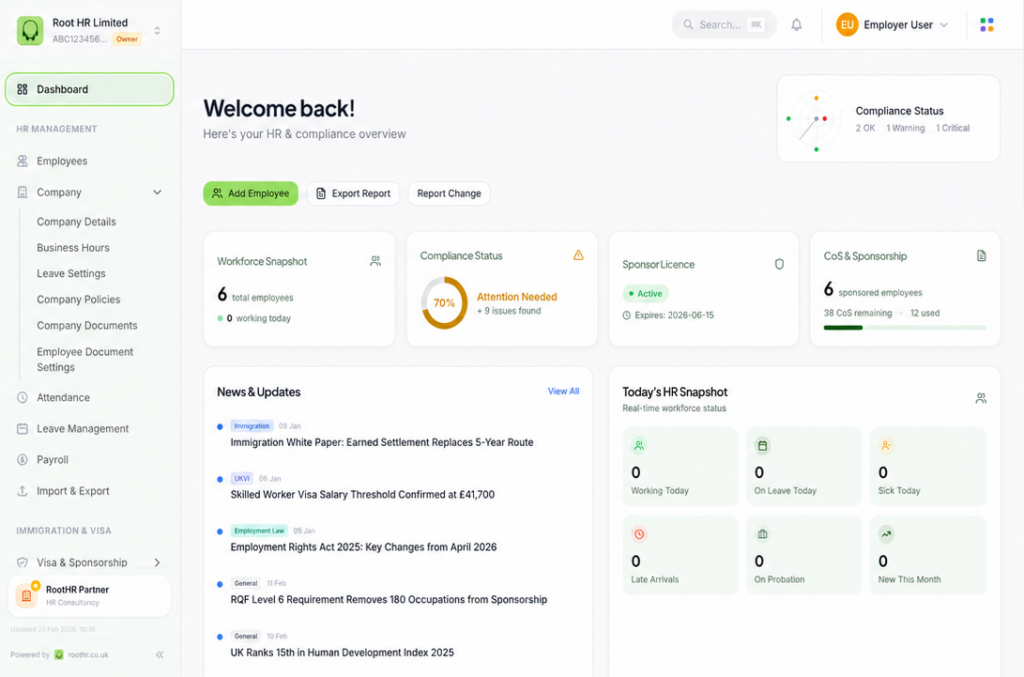
This is where digital HR technology can make a real difference. Modern HR platforms help businesses bring essential workforce information together, improve visibility, and create more organised processes. Features such as automated reminders, compliance checks, employee records management, and rota management can help reduce the risk of important tasks being overlooked.
Root HR is helping SMEs take a simpler approach to workforce management by providing tools to manage employee records, documents, leave, rotas, shifts, and key HR processes from one platform.
The future of HR is not only about finding great people. It is also about creating reliable systems that support employees throughout their journey with a business.
As UK SMEs continue to grow, accessible HR technology will become increasingly important in helping businesses save time, reduce administration, and manage their workforce with greater confidence.