
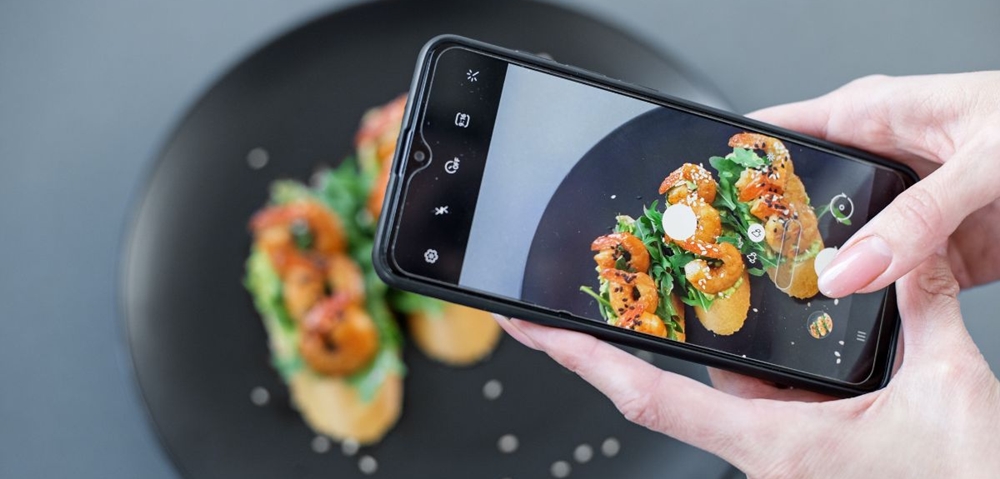
Whilst some consider it playing with food, others feel on-plate photography is a restaurant staple.
Like it or not, the snap-happy group may well be onto something. Far from a childish fad, it seems the foodie trend is here to stay – visible for all eyes to see. In fact, with over two-billion regular users on Instagram according to the platform, 250 million of whom run food-based accounts, serving up something that’s just as stimulating for the eyes as it is for the tastebuds has become a permanent ingredient in hospitality success.
Flavour meets filters
If science is anything to go by, picture-perfect dishes aren’t just for the ‘Gram, either. Researchers have long reported a deeper connection between visual appeal and culinary satisfaction, with a group of Oxford University psychologists presenting concrete evidence to this effect using none other than Kandinsky’s art for inspiration.
When the components of a 30-ingredient salad were arranged on the plate like an abstract painting, rather than just being thrown together, the 60 volunteers – aged 18 to 58 – participating in the study unanimously agreed they had more of an appetite and would be willing to pay more.
A picture is worth a thousand bites
In addition to boosting consumer satisfaction, catering to this visual market can help to boost restaurant numbers and reputations.
According to digital experts, Digimind, 69% of millennials (born 1981 – 1996) photograph their food before eating. The majority will then share these photographs, not just with the 27% of Instagram users who dedicate their accounts to food content, but also with the wider public online. Given that Instagram is now the world’s fourth most visited website, this gives restaurants incredible reach.
Add to this the impact of sharing platforms like Facebook and TikTok and you’ve got yourself one of the most effective, organic marketing campaigns available. It doesn’t take much to go viral either, with more than 23 million viewers across Instagram and TikTok blowing up about a Manchester restaurant’s tiramisu drawer in November last year. The Italian eatery has since benefitted from a steady stream of enthusiastic customers and even A-list stars.
A taste of the ‘Gram
There are a couple of things hospitality companies can do to cook up a similar storm for the many eyes.
1. Picture-perfect plates
Visual appeal matters. And when it comes to creating photogenic menus, it’s all about engaging the senses. Textures, colours and unique presentation all have an impact, with research suggesting that brains are wired to associate specific qualities with certain properties and tastes. Take green foods, for instance, which come across as fresh and healthy.
Symmetry, shape and glossiness are additional positive factors thought to trigger the tastebuds, according to a paper published in the journal Food Quality and Preference, serving to activate the digestive enzymes that prep us for food. Restauranteurs should therefore look to secure these appealing qualities, not only in the preparation and presentation of dishes but also in the initial supply stages. By working with local farmers and providers, for example, ingredients will look and taste much fresher, with less time and distance between field and plate.
2. Know your audience
Understanding the Instagram audience is equally as important as the food being served. Food influencers can completely transform a restaurant’s success, so it’s important to stay on top of the latest food trends. This not only brings in crowds but also keeps your socials relevant, as does encouraging seasonal and limited-time offers, which keep both menus and content fresh and engaging.
Establishing close partnerships with local providers can help to meet changing seasonal demands in a manageable way, as proximity allows for greater flexibility without the risk of perishable items going to waste, since there’s no need to over order or overstock.
Plates with purpose
The big question, then, is how we can align our commitment to sustainable, purposeful dining with the visual demands of the Instagram culture?
Insta-indulgence unfortunately leads to food waste, with intricate garnishes and plating elements used solely for aesthetic purposes making hospitality less sustainable. This is bad news for restaurants looking to attract customers who are increasingly ethically minded.
Influencers demand perfect produce, with the public rejecting wonky fruit and misshapen veg. Short-term trends also add to agricultural waste, so, restaurants must take greater care not to overstock and make sure everything is used before it expires. By sourcing locally, hospitality can overcome this problem, not only ordering in smaller, manageable quantities but also reducing their carbon footprint given that food must travel fewer miles. Indeed, the hospitality industry must collaborate with local farmers and suppliers when planning their menus if they are to align innovation with sustainable restaurant life.
Indeed, sustainability is an imperative in modern dining, with the latest YouGov survey revealing that 53% of consumers want restaurants to facilitate sustainable food choices. Being transparent about your practices and processes is therefore essential, whether going green means root-to stem cooking – where each part of an ingredient is put to good use – or the implementation of traceable supply chains, with restaurants that can track and report on the ethical source of their ingredients standing to gain both direct custom and a better online reputation.
Embracing supply chain technologies like blockchain and collaborating directly with suppliers to reduce non-essential packaging can all help with this, as can cultivating strong relationships with several local suppliers to mitigate any risks associated with reliance on a single source. In essence, this means your dishes will never suffer in terms of aesthetics, should your regular supplier be hit with a problem or let you down.
Click-worthy kitchens
In adopting these practices, restaurants, cafés and other hospitality establishments can create true, click-worthy kitchens, drawing people in not just for aesthetics but also on the basis of strong company values. Supply chains may not be glamorous, but they are essential when it comes to aligning Insta-worthy dining with ever critical green-game demands.
Author: Nigel Draper the Founder and Managing Director of Sorsco, experts in supply chain and procurement for the hospitality sector.