
By Lyn Hatch, Head of Student Experience at Health Coaches Academy
As we head into a new planning cycle, we need to ask how to make 2026 people strategies more effective, not just on paper, but in practice.
The latest Keep Britain Working report from the Government highlights the scale of this challenge. Ill heath is now the leading cause of economic inactivity, with over one in five working age adults neither working, nor seeking work because of health issues. The cost to employers is staggering, around £85 billion a year lost through absence, turnover and presenteeism.
Employees are feeling the strain, hybrid working has blurred the lines between home and office life, and too many interventions focus on symptoms rather than prevention. If we want to create healthier workplace cultures, we need to address the workforce as collectives, as well as individuals. Real change happens when people learn, reflect and take accountability to support each other together.
What group coaching offers that traditional models don’t
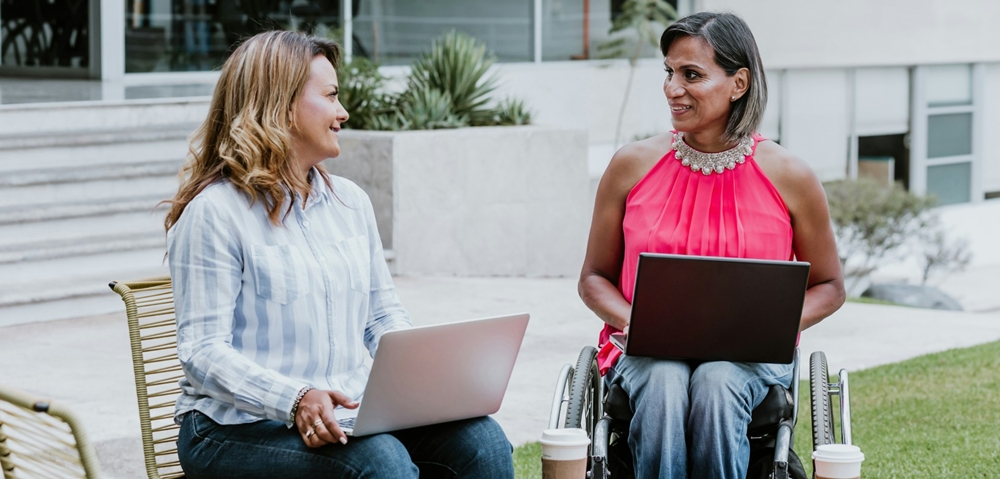
Group coaching brings people together to learn, reflect and problem-solve in small, structured sessions, typically six to ten participants with a coach guiding discussion. It combines the depth of personalised coaching with the scale of group learning.
When people talk through real challenges together, something changes. They begin to recognise shared experiences, hold each other accountable, and take ownership of what they want to improve – people are around 65% more likely to achieve their goals when they share them with a group, and that rises to 95% when there are regular check-ins (American Society for Training & Development, 2014).
Another study found that group coaching allowed for deeper shifts in mindset, as individuals were opened up to other perspectives (Peters, 2024), while a separate report highlighted how group coaching enhances empathy and promotes faster problem solving (CoachHub, 2024).
As workplaces become more dispersed and digital, that sense of community can be missing. Whilst home working offers flexibility it can also lead to isolation and disconnection if not managed well. Group coaching, which can be online and in-person, helps to rebuild that sense of community, and in doing so, strengthens both wellbeing and performance.
A tool for modern leadership and wellbeing
For employers, group coaching is not simply a new format for development. It’s a way to address several organisational priorities at once, such as leadership capability, engagement, and wellbeing.
Managers who take part in coaching groups often become better listeners and communicators.
Employees who join wellbeing-focused groups report higher confidence, reduced stress, and stronger peer relationships, and because group coaching is cost-effective and scalable, it can reach far more people than traditional one-to-one models.
Often, the group setting can also encourage honesty, which can flow into work life long after the sessions end. People become more willing to discuss workload pressures, health concerns or personal blockers when they realise others share them too. Over time, this builds a sense of community that continues between sessions whether that’s through check-ins or shared encouragement. The coach gradually becomes less central as the group takes on a life of its own, supporting one another in real and practical ways.
Simple examples of this spillover effect are everywhere: colleagues sharing nutritious lunch ideas, reminding each other to take breaks, going for walking meetings, or keeping one another accountable for healthier routines and boundaries. In some organisations, I’ve even seen groups that shape their company’s wellbeing plans, spotting what’s missing and feeling confident to raise it together. It’s no longer one lone voice asking for change, but a collective movement driving it, a shift that makes wellbeing more sustainable for everyone.
Making group coaching it work in practice
The success of group coaching not only depends on what’s taught, but also how you design the programme. To build positive and useful sessions as a manager or leader, you must think about the following:
- Purpose comes first. Coaching works best when there’s a clear reason for bringing people together, whether that’s to support new managers, improve cross-team collaboration, or embed wellbeing into daily habits.
- Facilitation is equally important. The coach’s role is to create psychological safety so everyone feels able to contribute. Research shows groups are most effective when participants share similar goals or levels of experience.
- Choose the right Health Coach. Many of these professionals, myself included, come from business or leadership backgrounds. We understand the pressures of targets, deadlines, and hybrid working because we’ve lived them. That lived experience allows Health Coaches to connect with employees on a human level while grounding conversations in evidence based behaviour change.
- Finally, structure matters. Sessions that include regular check-ins, reflection, and simple accountability steps help maintain momentum. It’s this rhythm of talking, reflecting, actioning and repeating that helps insight turn into change.
Avoiding common pitfalls
Group coaching isn’t a quick fix. If the mix of people isn’t right or the facilitation lacks skill, conversations can feel surface-level or even stressful (Cranston and Budd, 2024). That’s why planning and alignment are so critical. Participants should know what to expect, why they’ve been invited, and how it links to organisational goals.
Without that clarity, enthusiasm fades quickly. When those foundations are in place, the benefits are significant, leading to more open communication, stronger peer relationships and culture and therefore engagement and retention.
Looking ahead to 2026
The workforce entering 2026 is facing various changes, and people are looking for purpose, balance, and a sense of belonging at work. Wellbeing trends point to a shift from mental health awareness to mental fitness, from reactive support to prevention. Burnout, financial stress, and inclusion are all becoming strategic priorities, and organisations are under growing pressure to prove that wellbeing delivers measurable impact.
In practice, the kind of tools used in health coaching, like the wheel of life, help people take a more holistic view of where they are now and what needs attention. In group sessions, this reflection becomes shared; people move out of “heads down” and “survival mode”, they gain perspective and create action plans together.
Group coaching sits right at the centre of these priorities. It builds resilience before a crisis hits, opens up honest conversations about stress and workload, and creates space for shared accountability. It helps people feel seen and supported, while giving leaders the insight to act on what really matters.
As you shape your 2026 people strategy, this kind of culture isn’t a “nice to have” but a business essential.