
Most people start a business for freedom. More control. More income. More flexibility. The chance to build something of their own. And yet, many business owners quietly end up trapped by the very thing they created.
Every important decision routes through them. Problems escalate upwards. Holidays feel stressful. Growth creates complexity instead of freedom.
From the outside, the business can look successful. Revenue grows. The team expands. Customers keep coming. But beneath the surface, many SMEs are being held together by effort rather than structure. That matters, because effort does not scale. Engineering does.
The Owner Bottleneck
Spend time inside most small businesses and the pattern becomes obvious. The owner becomes the centre of everything.
Staff ask permission instead of making decisions. Problems are escalated upwards. Customers want reassurance from “the boss”. Even relatively minor issues find their way back to the founder’s desk.
The irony is many owners complain constantly about being overwhelmed while simultaneously designing a business that depends entirely on them.
That dependency often feels manageable in the early years. Particularly when growth is happening quickly. But over time it becomes exhausting.
The business cannot move faster than the owner’s capacity to absorb pressure. And eventually the owner becomes the bottleneck.
Why Motivation Doesn’t Scale
Modern business culture loves motivation. Morning routines. Mindset. Hustle. Productivity hacks.
There is nothing inherently wrong with any of those things. But motivation creates short bursts of performance. Processes create consistency. That is the difference.
A motivated person can perform well for a period of time. A well-designed business can perform consistently without requiring heroic effort every day. That consistency is what allows businesses to scale calmly instead of chaotically.
The businesses that endure are rarely the loudest. They are usually the ones with clear standards, repeatable systems and teams that understand how things are done without needing constant supervision.
Where Most Businesses Get Stuck
This is where many business owners become overwhelmed. They understand they need systems and processes, but the thought of sitting down to write a full operations manual feels impossible.
I could not think of anything worse than locking myself in a room trying to document an entire business from scratch.
So we approached it differently. Each week, we focused on one process. How enquiries were handled. How customers were followed up. How problems were escalated. How complaints were resolved. We sat down as a team, discussed the best way to handle that process, agreed it together and documented it.
Not my process. Our process.
That mattered because the team bought into it. They helped build it.
Within a relatively short period of time, we had the foundations of a genuine processes and procedures guide.
But the important part came next. We kept refining it. We revisited the first process. Then the second. Then the third. Every time we reviewed them, they improved.
Not once in five years did we look at a process and say, “That’s perfect. Nothing to change.”
It always got better. That is how real business transformation happens. Not through intensity. Through consistency.
There is an old saying about planting a tree. The best time was twenty years ago. The second best time is today.
This is not a quick-fix approach. It will not transform your business overnight. But imagine how different your business could look in five years if you committed to improving one important process every single week starting today.
The Freedom Shift
Most business owners secretly fantasise about escaping the pressure. But perhaps there is a better ambition. Build a business so good you would be mad to sell it.
A business where the team can make decisions confidently. Where customers receive a consistent experience. Where standards are clear. Where profit is predictable. Where the owner can step away for a week without everything wobbling.
Not because you want to leave. But because you finally can.
Ironically, those are often the businesses buyers value most highly. Not the businesses built on adrenaline and constant owner involvement. The ones built on structure, clarity and consistency.
The Real Question
If you disappeared from your business for ninety days, what would break first? That question reveals more about the quality of a business than almost any financial report. Because the businesses that survive without constant owner intervention are usually the ones built to last. And those businesses are rarely created through hustle alone. They are engineered over time. One process at a time.
Author Bio
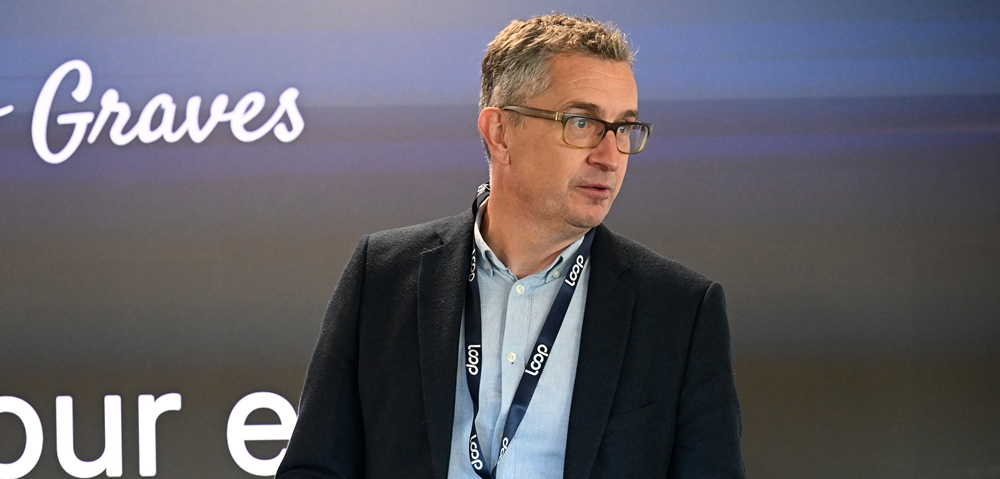
Rob Graves built, scaled and sold his own business before turning his focus to helping other business owners do the same. Through Key Coaching and his book It’s a Business, Not a Job, he works with SMEs that want more than income, they want a business that functions without depending entirely on them.