
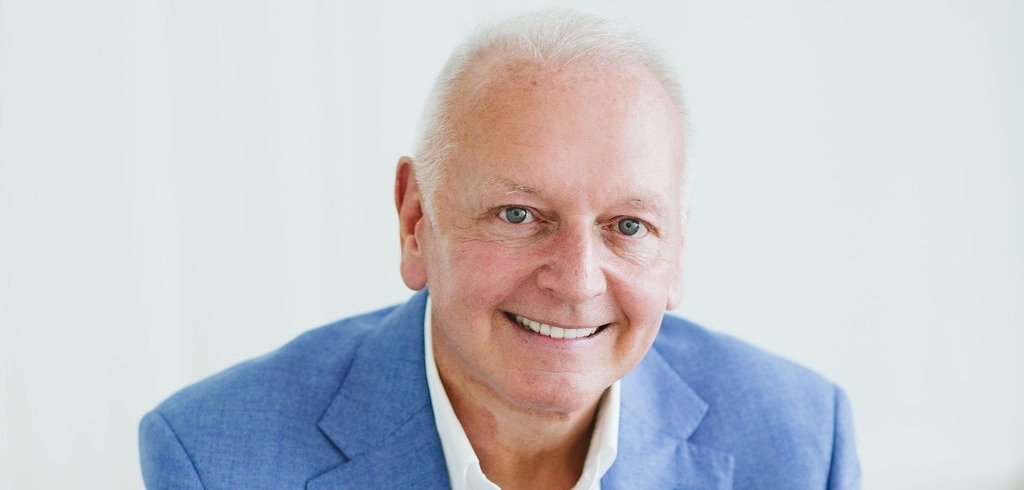
Self-made millionaire, entrepreneur and investor Gary Ashworth has built, backed, and exited more than 30 businesses over four decades, earning a reputation for turning disciplined strategy into lasting value. In the following piece, he shares hard-won lessons from founders who focus on long-term growth over quick wins—revealing why patience, measured risk, and consistency are the real drivers of serious wealth.
I’ve backed or founded over 30 companies. Some made fortunes. Some lost millions. The difference between the two rarely had anything to do with how clever the founders were or how clever the initial idea was.
The winners understood something the losers didn’t – you only need to double £10,000 ten times to make £10 million. Ten good decisions in your lifetime. That can’t be too hard, can it?
This is what I’ve learned from founders who have successfully built businesses that lasted.
They Think in Years, Not Quarters
The founders who build generational wealth operate on a different timescale to everyone else. While their competitors are obsessing over this quarter’s numbers, they’re asking what the business will look like in three years. In ten years. In thirty years.
If you double your starting stake every three years, it’ll take thirty years of boring, systematic decisions. Many founders give up after the first dip, especially young business owners. Youth culture demands instant gratification. The long-game players know that any dip could well be just a blip
They Use Leverage at the 66% Sweet Spot
Debt amplifies everything. Your wins get bigger. Your losses can be catastrophic. The founders who play the long game understand this mathematically, not emotionally.
I use 66% leverage when I buy assets – whether property or businesses. That ratio means if things go wrong, I’ve got buffer. If things go right, I’ve multiplied my returns significantly. But I’ve also stress-tested the numbers before I borrowed a penny.
What if revenue drops 20%? What if interest rates spike? If the mathematics still work under those scenarios, I borrow. If they don’t, I wait.
The founders who blow up are the ones who leverage to the hilt based on optimistic projections, then panic when reality differs from their spreadsheet fantasies.
They Keep Cash When Everyone Else Is Spending
When I took InterQuest Group from startup to £150 million revenue, we maintained cash reserves even when bankers were throwing cheap debt at us. When COVID hit, we had options while some competitors struggled.
The founders who survive every cycle keep 20-30% of capital liquid specifically for the moments when everyone else is panicking.
Often, the best opportunities only appear when markets wobble. Distressed competitors need buyers. Talented people suddenly become available. Customers emerge, whose suppliers just went bust.
You can’t capitalise on any of that if you’ve deployed every penny into growth when times were good.
They Add Value Before They Exit
The quickest way to spot a founder who won’t build lasting wealth is that they’re already talking about their exit strategy after the first year.
The long-game founders do the opposite. They buy or build something, then spend three years or more improving it. Pulling the lever. Implementing better systems. Hiring more talented people. Higher margins or an improved market position.
Then, and only then, do they think about selling or refinancing.
This isn’t altruism. It’s mathematics. If you buy a business for £1 million with 66% leverage (£340k of your money, £660k borrowed), spend £100k improving it, then sell it three years later for £2 million, you’ve turned £440k into roughly £900k after paying back the debt. You’ve doubled your money and used your profits to service the debt along the way.
Do that ten times and you’ve turned relatively modest starting capital into serious wealth. That’s not luck. It’s just understanding that the cake needs time to bake.
They Ignore Most Advice
The founders who build serious wealth have learned to be polite about advice while quietly ignoring most of it.
Your accountant will tell you to be conservative. Your lawyer will highlight every risk. The newspaper headlines are constantly screaming doom.
The long-game founders listen, nod, then run their own numbers and make their own decisions based on mathematics, not other people’s risk tolerance or emotion.
My Conclusion
After forty years of building businesses, I’ve noticed that the founders who build generational wealth aren’t always the smartest people in the room and they’re rarely the most charismatic. They’re usually not the ones with the flashiest ideas.
They’re just the ones boring enough to stick to a system that works, patient enough to let it compound, and disciplined enough to ignore the noise in the background.
In my experience, boring and systematic beats exciting and reactive every single time.
Gary Ashworth is Chairman of Albany Beck and author of “Double Up Money Mastery” plus the Dumm.org community. He splits his time between London and Dubai, where he helps investors apply systematic wealth-building strategies to regional opportunities.