

High-functioning anxiety is a broad term for those who live with generalised anxiety disorder but identify as functioning reasonably well and, in some cases, extremely well. It is often overlooked due to its subtle presentation. It’s deceptively difficult to understand the condition as individuals with it typically look like they have a successful work and private life, however, below the surface of a perfect exterior, they are fighting a constant battle with anxiety.
High-performance cultural paradox
In the ever-evolving landscape of modern workplaces, the pursuit of excellence has birthed what many refer to as “high-performance cultures.” While aimed at driving success and outperforming competitors, this focus on achievement and results has inadvertently fostered environments ripe for the development of high-functioning anxiety among employees.

Shamira Graham, Chief Commercial Officer of Onebright Mental Health & BABCP Accredited CBT Therapist, looks at how this drive for unparalleled success, when coupled with the perception of an expectation to consistently outdo oneself and others, can transform a motivating workplace into a pressure cooker of stress and anxiety for some individuals. High-performance cultures, characterised by their pursuit of productivity and results, often blur the lines between healthy ambition and unhealthly work environments and cultures. Employees find themselves highly worked, highly stressed, and perpetually striving for unattainable perfection.
Causes of high-functioning anxiety
The emergence of high-functioning anxiety in the workplace is multifaceted, stemming from a complex interplay of internal and external factors:
- Clinical Perfectionism: High achievers often impose relentless pressure on themselves to excel, driven by a deep-seated fear of failure.
- Workload and deadlines: Excessive workloads and tight deadlines contribute to a pervasive sense of being overwhelmed, fueling anxiety.
- Work-life balance: The challenge of disconnecting from work exacerbates stress and anxiety, blurring the boundaries between professional and personal life.
- Fear of negative judgment: Anxiety is magnified by the constant worry about how one is perceived by peers and superiors, leading to overthinking and self-doubt.
How symptoms of high-functioning anxiety may present:
At work
- An individual may be the model employee: arriving to work earlier than everyone, impeccably dressed and has never missed a deadline or fallen short of a task
- Never taking time off, even in times of need or if they are sick
- Fears of criticism or significant self-criticism
- Fears of looking inadequate or foolish to others
- Significant stress
- Impossibly high standards that even when reached, don’t leave you feeling satisfied
- Working long hours and always going above and beyond to make sure you don’t make an error
In personal life:
- Controlling behaviour with strict routines and habits
- Seeming busy all the time with a to-do list that never ends
- Striving for perfection in every area of life
- People pleasing others and inability to say no often resulting in full social calendars
- Neglecting all other domains for work, an erosion of family time, exercise and social activities
Other symptoms:
- Excessive worrying: An excessive stream of concerns about work, performance, and future projects, leading to persistent unease.
- Perfectionism: A relentless pursuit of flawlessness, striving to meet demanding standards that are self-imposed and relentlessly pursued, despite causing problems driven by the fear of failure which paradoxically breeds more anxiety.
- Delegation difficulties: A reluctance to delegate due to fears that others’ work will not meet their own stringent standards, thereby increasing their workload and stress levels.
- Physical symptoms: Anxiety’s somatic manifestations include headaches, muscle tension, gastrointestinal issues, and sleep disturbances.
Employers should be wary of the symptoms and individuals prone to healthy amounts of work stress spiralling into constant anxiety. Although the idea of high-functioning anxiety seems like a perfect employee, it is important to remember that high-functioning anxiety works brilliantly well, until it doesn’t.
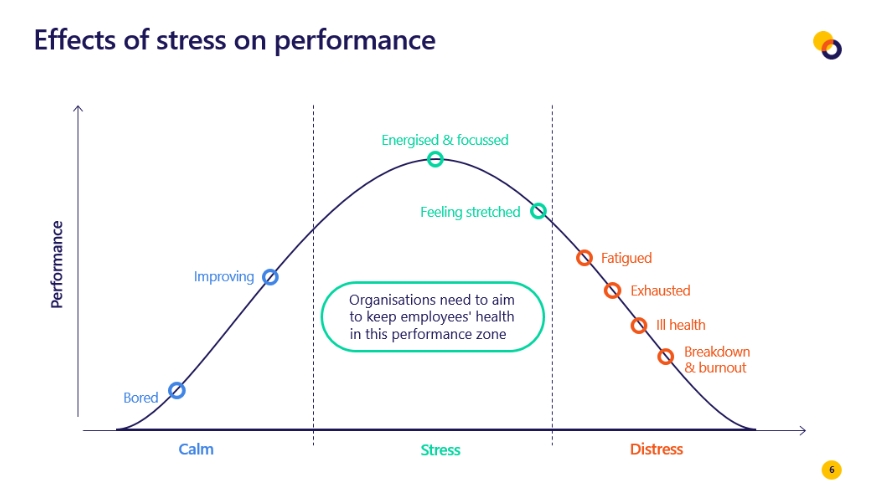
The graph above shows the diminishing returns to scale in terms of the correlation between performance and anxiety levels. There is a healthy level of stress that is required for a base level of motivation as shown in the ‘calm’ and ‘stress’ regions, where performance improves as healthy stress levels rise. Organisations should aim for a healthy level of stress to optimise employee well-being and performance. Once this threshold is surpassed, there is a significant decline in not only performance and productivity but also in employee health and well-being.
Managing high-functioning anxiety
Recognising the strengths inherent in those with high-functioning anxiety is crucial. Their empathy, diligence, and conscientiousness are invaluable assets. Effective management of it involves a combination of professional support, lifestyle adjustments, and personal growth:
- Cognitive Behavioral Therapy (CBT): CBT helps individuals reframe negative thought patterns and develop healthier coping mechanisms, encouraging a shift from self-criticism to self-compassion. Develop cognitive flexibility to update beliefs driving unrelenting high standards, building more adaptive and flexible beliefs
- Engaging in valued activities outside of the workplace (connecting with friends, socialising, community activities, physical activities etc), to foster and build a sense of wider sense of self worth
- Building support networks: Cultivating a support system provides a safety net of understanding and acceptance, crucial for navigating the challenges of high-functioning anxiety.
- Aligning with core values: Identifying and living in accordance with one’s core values, rather than societal expectations, promotes a more authentic and fulfilling life.
High-functioning anxiety in the workplace is a complex issue that requires a multifaceted approach. By fostering environments that prioritise mental health and well-being, companies can mitigate the adverse effects of high-performance cultures.
For individuals, recognising the signs of high-functioning anxiety and seeking appropriate support can pave the way for a more balanced and fulfilling professional life. Together, we can transform the narrative around workplace anxiety, moving towards a culture that values both achievement and well-being in equal measure.