
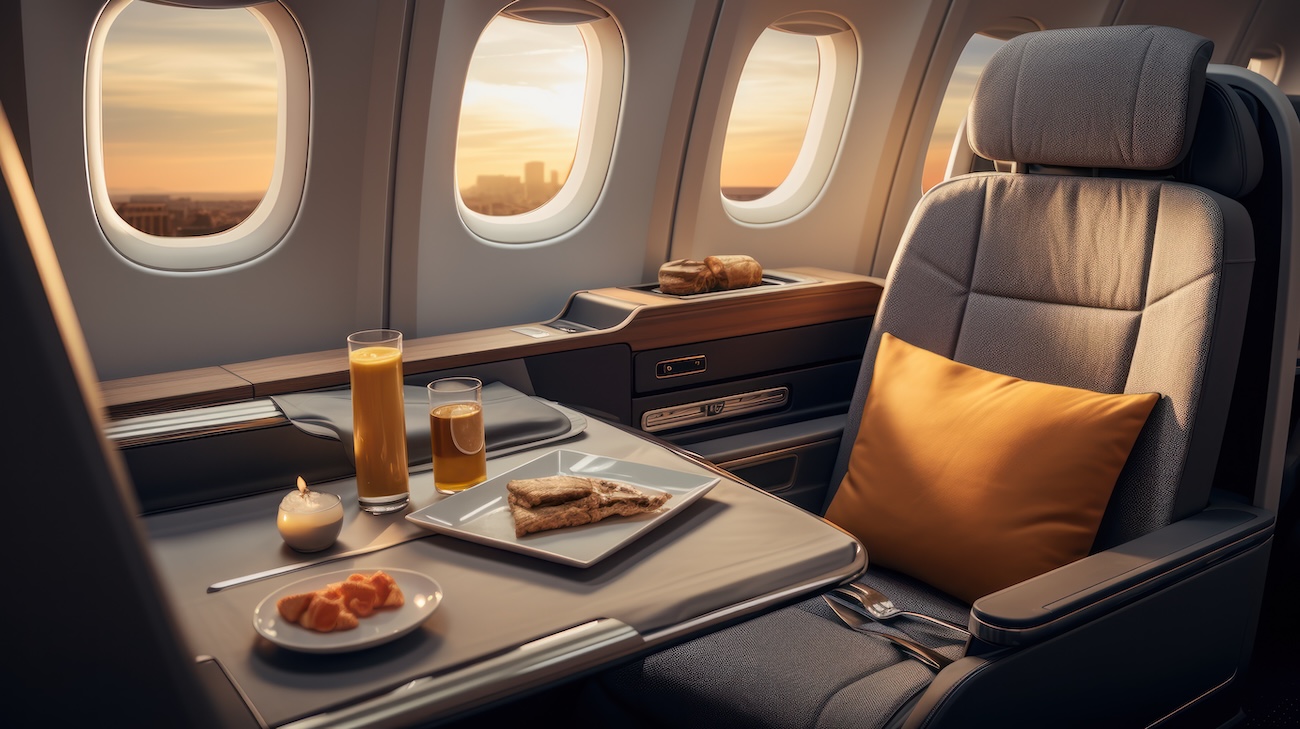
Why 2026 will be the year SMEs go ‘premium’ on the road
As cost pressures linger, growing British businesses are no longer asking how can we travel less? but how can we travel better? – by investing in travel experiences that support performance, and wellbeing. In 2025, 94% of UK SMEs sent employees on business trips according to research by American Express Global Business Travel (Amex GBT) with three in four believing that travel and in-person meetings are crucial for winning new business and maintaining client relationships.
Long days, early flights and high stakes meetings put strain on employees, and businesses are increasingly aware that better seats, hotel rooms and smoother journeys fuel growth and support employee retention. 2026 will see a continued and meaningful shift to premium travel as an investment.
Doubling demand for premium travel
Higher demand for premium cabin classes is pushing prices upwards, with business and premium economy fares increasing more than standard economy rates across nearly every route. Since 2017, the number of carriers offering premium economy class has more than doubled to 88 and the number of airport lounges is projected to grow by 15% this year.
Demand for premium hotel rooms is also on the rise. Amex GBT’s latest Hotel Monitor shows average rates rising

+4.0% in New York on average, with rates at luxury properties expected to rise by 6.3%; further examples are Paris (5.9% vs 3.0%) and Chicago 5.1% vs 4.2%). A pattern consistent with firms placing travellers in better equipped, productivity boosting accommodation.
Better travel, more loyalty
Rising demand for premium options reflects a broader shift in how business travel is viewed, not simply as a cost for SMEs to control, but as a valuable tool for employee retention and growth.
Displaying a willingness to go the extra mile when it comes to ensuring traveller comfort with premium air and hotel offerings communicates a sense of value to employees. When workers feel at home within an organisation, they’re more likely to stay long-term, and feel motivated to perform. Even the act of travelling itself, particularly for workshops and offsites, can make a huge difference in strengthening company culture.
It also helps to emphasise the importance of their roles while travelling on behalf of the business. It’s much easier to feel confident going into an important customer meeting when you’ve been booked accommodation that makes you feel like a valued member of the organisation, and somebody worth investing in.
Premium options also create a greater sense of excitement towards business travel, which is crucial for spurring growth. Comparing the UK’s fastest growing SMEs with those following behind makes this link clear – 66% that had achieved consistent, strong annual growth sent employees on international business trips in 2024, compared to 52% of those reporting slower, or stagnant growth.
Key pillars of growth, like establishing new trade relationships or expanding into new territories, are nearly impossible to achieve without in-person meetings – it’s little surprise then that growing SMEs view face-to-face engagement as not just a major priority today, but one that will remain top of the agenda in the years to come. There’s only so much trust and familiarity that can be built virtually. That’s why SMEs investing in sending their people abroad are experiencing greater success, and ensuring those travellers have the best experience possible.
There is also a productivity upside to premium travel. More spacious airline cabins create better working environments, offer greater privacy and help travellers arrive rested and ready. The benefits are similar when looking at rail: first class cabins offer more table space and less noise, elements that better allow people to work on the move. These changes may seem inconsequential in a vacuum, but if every traveller is able to claw back a few hours of working time during their journeys, just think about how much more can get done when scaled across an SME’s entire workforce.
Investing in people
The rise of ‘premiumisation’ has a direct link to the value that businesses derive from travel. Organisations that aren’t prioritising the experiences of travellers, or neglect the benefits of widening their networks altogether, risk letting growth stagnate at a time where other economic factors threaten to stand in the way of success.
Prices may be on the rise as a result of increased demand, but travel remains an investment worth making in service of people, their potential and organisational growth.
Sara Andell, Director of Consulting Strategy at Amex GBT