
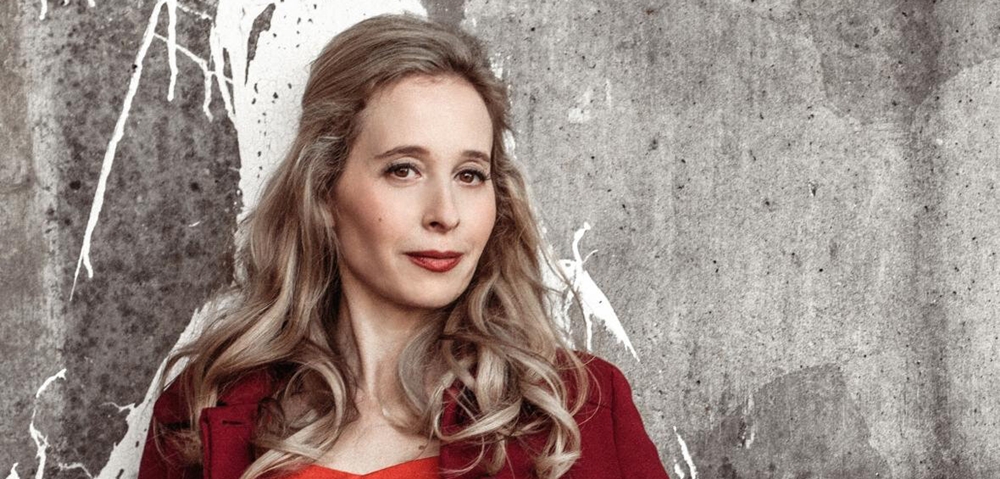
Noreena Hertz is one of the world’s leading thinkers and a renowned economist whose work bridges the worlds of economics, technology, geopolitics, and society. Frequently named among the top business speakers to hire, Noreena has advised global organisations and Fortune 500 companies alike, delivering razor-sharp insights on the forces shaping our world. Her bestselling books, high-profile media appearances, and influential roles on major corporate boards underline her position as a sought-after voice on strategy, innovation, and the future of work.
In this interview, Noreena delves into some of the most urgent and transformative issues facing businesses today – from the economic value of gender diversity to the rise of Generation Z (or, as she compellingly rebrands them, Generation K). She explores how this emerging cohort is reshaping the workplace and consumer landscape, and unpacks the key global forces – including nationalism, technological disruption, and shifting geopolitical alliances – that will define the next chapter of our economic future.
Q: Why should businesses care about gender diversity?
Noreena Hertz:
“Well, first, it’s the right thing to do. And secondly, it’s good for business. There’s a significant body of academic research that shows, uncontroversially by now, that companies that focus on gender diversity are more profitable, have higher stock prices, and have a higher return on equity than companies who do not.
So, this is one of those rare cases when there’s a real win-win at play. Invest in your women, and you will see a payoff.”
Q: Why should companies think about Gen Z?
Noreena Hertz:
“Well, Generation Z, within three years, is going to make up a third of the global workforce. Within two years, it’s going to be worth £10 trillion as a market.
And yet, companies who’ve often thought very hard about millennials are only starting to get their heads round who Gen Z are. They’re actually very different to the millennials, different, in fact, to all generations. And that’s because they’ve been shaped by three fundamental forces:
- Technology – and that’s in some ways the most obvious. This is the generation who are born digital, almost constantly on their phone, scrolling, texting, Snapchatting, TikToking. This is the generation who definitely don’t remember an era before they were digital.
- Economic downturns – this is also the generation that were forged by the 2008 financial crisis, the economic downturn around the pandemic, and now, of course, are still continuing to face an environment in which cost of living continues to go up, and things like the affordability of housing or rent is increasingly a pressure.
- A world of existential threat – this is the generation that have also been shaped by waves of terrorist attacks, whether we are talking Manchester, Hamburg, Boston, Munich. The generation have also been shaped by climate change, wildfires, flooding. The generation who has also witnessed on our TV screens, all too often in recent times, war. And it’s not that the world is necessarily more dangerous than it ever was, it is that this generation experiences this danger differently – 24/7, repeatedly, on their phones.
And it is for these three reasons – downturn, danger, and technology – that I actually don’t call this generation ‘Generation Z.’ I call them ‘Generation K,’ after Katniss Everdeen, the heroine of The Hunger Games. Because for this generation, like for Katniss, the world is no oyster. Instead, it is increasingly unequal, dystopic, and harsh.”
Q: What forces will fundamentally shape the economic landscape over the next few years?
Noreena Hetz:
“There are four forces which are going to fundamentally shape the economic landscape over the next few years.
1/ Globalisation:
The first is what’s going on with globalisation. Unlike the last few decades, in which the world had a kind of kumbaya, all-around-the-table-together, happy-clappy vibe, where we’re at today is a very different place.
Think about the fact that we are at war at the moment on two fronts, globally – in Europe and in the Middle East – or the cosiness that we’re increasingly seeing between China, North Korea, Iran, and Russia.
And then, of course, there’s trade. Up until about a decade ago, free trade was absolutely the mantra. Yet what we have seen over the past ten years is increasingly protectionism, industrial policy, and tariffs appearing.
And then there is the supply chain, which is increasingly being reshaped in a very different direction. Companies are now thinking about the geopolitical implications of where they manufacture and are near-shoring or reshoring production. Prices will inevitably rise, and growth is likely to slow, as predicted by the IMF and World Bank.
2/ Nationalism:
The second trend is the rise in nationalism we have been witnessing amongst consumers. Whether it is in pop songs or buying behaviours, 60% of consumers globally say they would prefer to buy a product made in their own country. We also see a rise in nationalist politicians – from the US to India, Hungary to Italy – impacting tariffs, rule clarity, and social cohesion, all of which influence economic performance.
3/ Generation K (Gen Z):
The emergence of Generation K (previously known as Gen Z) is the third force. They are between 16 and 26 years old, will soon make up a third of the global workforce, and be worth £10 trillion in purchasing power. They have been shaped by technology, economic downturns, and existential threat – making them anxious, risk-averse, lonely, and demanding of personalisation. These traits affect consumption patterns, workplace culture, and long-term economic behaviours.
4/ Technology and Artificial Intelligence:
Artificial intelligence will also profoundly reshape the landscape. AI is helping people do things better and faster, but it is also replacing people at work. This dual effect is reshaping industries from media to healthcare to recruitment. But AI gets a lot wrong – a BBC study showed only 50% of AI-generated article summaries were accurate.
Moreover, the more people rely on AI, the less they use their own cognitive faculties. This carries huge implications for decision-making, productivity, and even democracy.
As we approach the point of Artificial General Intelligence – where AI is as capable as the smartest humans – the risks and disruptions to employment and social structure will only grow.”
Q: In what ways are Gen Z different in the workplace?
Noreena Hetz:
“I’ve conducted almost a decade’s worth of research on this generation – surveys, focus groups, interviews. In many ways, I have probably the biggest proprietary dataset on this generation out there. But I just want to highlight a few ways in which they are different to other generations.
- First:
They are extremely anxious. Not only anxious about their own personal lives and their own personal futures, especially in economic terms. This generation believes that they will inevitably be poorer than their parents, they’ll inevitably be struggling when it comes to buying a house in the future, inevitably getting into debt. But also concerned about big global issues – very anxious about those too: climate change, gender equality, terrorism, the ability in the future to secure, in an AI world, jobs. This generation needs far more pastoral care than any generation before.
- Second:
They are also very lonely – which may feel counter-intuitive given the extent of time they are on their phones. But one in five of this generation says that they don’t have a single friend at all. Eight in ten say that they are lonely sometimes or more often.
This impacts the workplace because we know that lonely workers are less productive, less motivated, more likely to quit than workers who are not. So, as organisations, are you doing enough to help your Gen K employees feel connected to each other and to you? And are you helping your Gen K consumers feel connected to you and your brand as well?
- Third:
This generation has grown up customising everything – from their sneakers to their Starbucks coffees. For this generation, having products, services, and even jobs that in some ways are unique to them is something they expect.
How can you, as an organisation, help them co-create alongside you?”
This interview with Noreena Hertz was conducted by John Hayes.