
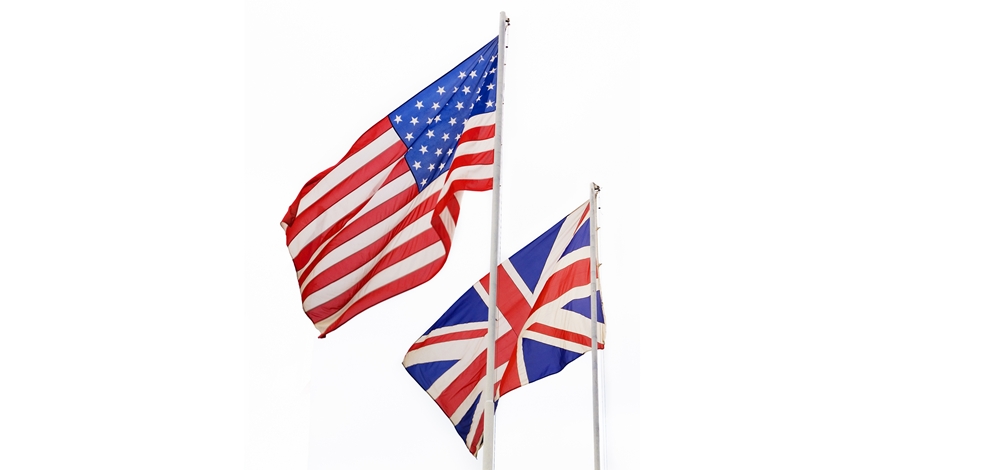
The United Kingdom is the third most-searched destination for Americans looking to relocate, as UK businesses seek closer ties with the U.S., increasing the need for cross-cultural training.
This month, UK business leaders prepare for the largest-ever UK trade mission to the United States, potentially increasing the number of Americans coming to the UK for work, whether on placements or through relocation.
The study, conducted by the cultural intelligence training platform Country Navigator, has revealed the top countries for attracting American workers by analysing annual relocation searches.
You can view the study here – https://www.countrynavigator.com/blog/global-talent-report
Most searched-for destinations among Americans looking to move abroad:
|
Rank |
Country |
Annual US relocation searches |
|
1 |
Canada |
105,500 |
|
2 |
New Zealand |
60,900 |
|
3 |
United Kingdom |
60,160 |
|
4 |
Republic of Ireland |
55,020 |
|
5 |
Spain |
51,280 |
|
6 |
Japan |
49,400 |
|
7 |
Portugal |
39,680 |
|
8 |
Australia |
34,860 |
|
9 |
Switzerland |
31,740 |
|
10 |
Thailand |
30,560 |
- Canada combines high demand with a top-five ranking, due to high amounts of American immigration and strong political stability.
- Spain ranks among the most searched countries, but places 17th in the report overall due to low political stability and American migration, while Japan ranks 16th despite attracting significant interest.
- All top five countries offer either English-speaking environments or strong cultural familiarity, alongside established migration pathways and stable job markets. This combination can make them feel more accessible to American workers considering a move abroad.
- Countries with strong English proficiency and cultural alignment tend to attract higher levels of American migration, with Ireland (673.9 per 100,000 people) and New Zealand (621.5).
Further insights:
- Switzerland ranks as the top country overall, scoring 8.34/10, supported by strong performance across multiple factors.
- Finland ranks as the most culturally similar country to the U.S., but doesn’t make the top 10 overall. For Americans relocating abroad, cultural alignment can shape how quickly individuals settle into new working environments.
Chris Crosby, Co-Founder at Country Navigator, comments: “Relocating to a new country is often approached as a practical decision, finding the right role, securing a visa, and understanding the logistics of moving. In reality, the biggest challenges tend to emerge after that point.
How people communicate, how decisions are made, and how relationships are built can vary significantly between countries. In unfamiliar environments, these differences can slow integration, create misunderstandings, and make it harder to settle into a new role.
This is particularly relevant in destinations that appear familiar on the surface. Shared language or similar ways of working can create an expectation of alignment, but subtle differences often only become clear over time.
For individuals relocating abroad, this shifts the focus from simply choosing the right destination to being prepared for how work will actually feel day to day. Developing an understanding of these differences in advance can help people adapt more quickly, build stronger working relationships, and ultimately get more from the experience of working internationally.
In my experience, success when moving abroad is not just about where you go, but how well you understand and adapt to the culture once you get there.”