
Social media platforms reportedly raked in a massive £430 million in 2025 alone from criminals targeting UK consumers through scam ads – a 56% increase compared to 2022. Alarmingly, Brits are losing an average of £1,258 per scam advert online.
Meta has also recently been named in a lawsuit alleging the tech giant earned around 10% of its profits – approximately $16 billion – from high-risk adverts across its platforms, including scam and banned product ads.
But where in the world are users most at risk from online financial scams – and what phrases do scammers most commonly use to lure them in?
With this in mind, the forex experts at BrokerChooser scraped the Meta Ads Library and analysed over 1,400 active finance-related ads live in April 2026 to identify the countries where social media users are most vulnerable.
Key findings:
-
As of April 2026, UK social media users are at the second-highest exposure risk to scam financial ads among all countries analysed, with 7.52% of ads flagged as scam.
- Adam Nasli, Head Broker Analyst from BrokerChooser, highlighted the surge in investment scams on social media and the red flag scam phrases users should watch for in their feeds.
-
A sharp rise in ads promoting AI-powered trading bots was identified, often promising guaranteed profits and accurate signals while failing to disclose risks.
-
Fraudsters tend to exploit personal messaging apps, directing users to Instagram and WhatsApp to bypass platform detection.
UK social media users are the second most exposed to scam finance ads
|
Rank |
Country |
Safe financial ads (%) |
Financial ads without risk disclaimers (%) |
Financial ads with exaggerated claims (%) |
Risky financial ads (%) |
Scam financial ads (%) |
Total high-risk financial ads (risky + scam %) |
|
1 |
Poland |
15.00% |
90.00% |
70.00% |
70.00% |
15.00% |
85.00% |
|
2 |
United Kingdom |
66.81% |
54.42% |
28.32% |
25.66% |
7.52% |
33.19% |
|
3 |
United States |
53.22% |
85.19% |
40.13% |
40.34% |
6.44% |
46.78% |
|
4 |
Italy |
11.59% |
94.20% |
76.81% |
82.61% |
5.80% |
88.41% |
|
5 |
Germany |
54.14% |
80.66% |
45.30% |
42.54% |
3.31% |
45.86% |
|
6 |
France |
63.64% |
84.85% |
21.21% |
33.33% |
3.03% |
36.36% |
|
7 |
Spain |
38.89% |
81.94% |
47.22% |
58.33% |
2.78% |
61.11% |
|
8 |
Switzerland |
9.80% |
90.20% |
74.51% |
88.24% |
1.96% |
90.20% |
|
9 |
Ireland |
53.16% |
77.22% |
53.16% |
45.57% |
1.27% |
46.84% |
|
10 |
Belgium |
13.64% |
95.45% |
68.18% |
86.36% |
0.00% |
86.36% |
|
11 |
Czech Republic |
21.43% |
78.57% |
46.43% |
78.57% |
0.00% |
78.57% |
|
12 |
Finland |
26.67% |
73.33% |
60.00% |
73.33% |
0.00% |
73.33% |
|
13 |
Denmark |
38.46% |
69.23% |
46.15% |
61.54% |
0.00% |
61.54% |
|
14 |
Greece |
65.52% |
86.21% |
34.48% |
34.48% |
0.00% |
34.48% |
Please find the full dataset here.
One-third of UK finance ads on Meta are flagged as high-risk to users
UK social media users remain at considerable risk of financial scams online, with a worrying 33.19% of finance-related Meta ads classified as ‘high-risk’, and almost one in ten (7.52%) of all ads identified as scams. While the majority (66.81%) of ads are considered safe, the fact that a third are deemed high risk means many users continue to encounter potentially misleading financial promotions in their feeds.
According to BrokerChooser‘s analysis, these risky ads tend to promise rapid profits while downplaying potential losses. Over half (54.42%) of financial ads seen by social media users come without adequate risk disclaimers and more than a quarter (28.32%) like to use exaggerated, persuasive language such as “multiply your potential up to 20x!” and “instant payouts with 99.9% processed immediately”.
Particularly concerning is the rise of AI-powered trading bots marketed for forex and crypto, often directing users to contact sellers via WhatsApp, a platform largely unregulated with minimal consumer protection.
Polish users face the highest risk from social media financial scams
Social media users in Poland face the greatest exposure to financial scams online, with more than eight in ten (85%) finance-related Meta ads identified as either risky or outright scams. The scale of misleading content is striking: roughly 90% of financial ads lack proper risk disclaimers and 70% rely on exaggerated claims to entice users.
Adam Nasli, Head Broker Analyst from BrokerChooser, commented on the rise of investment scams across social media:
“Social media has become a fertile hunting ground for financial scammers, reaching billions of users online. Our analysis reveals that many high-risk ads rely heavily on persuasive, attention-grabbing language while avoiding clear risk disclosure.
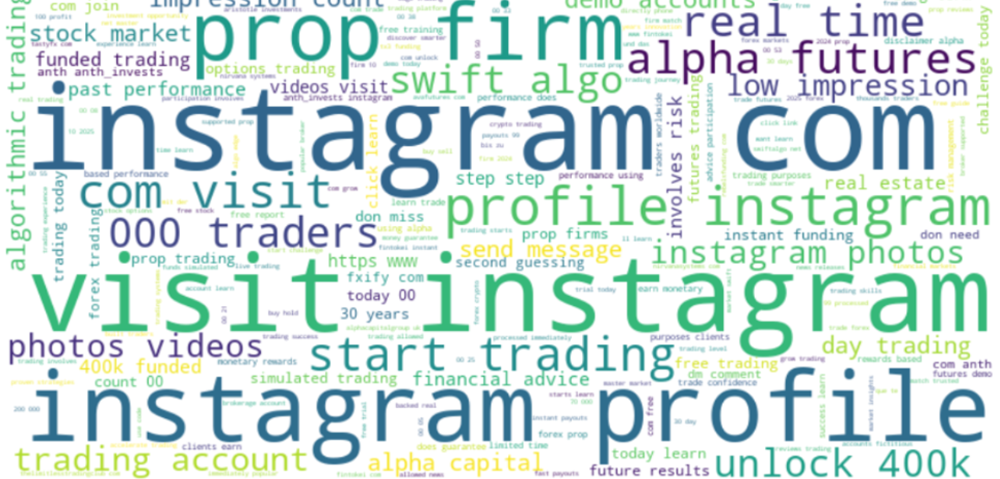
Common red flags include phrases like “unlock $400K”, “instant funding” and “free trading”, often paired with prompts directing users to private messaging apps such as Instagram, WhatsApp or Telegram. By moving interactions off-platform, scammers bypass moderation, avoid detection and manipulate users directly in a one-on-one setting.
Prop trading ads are especially widespread on social platforms, promoting access to large trading capital with minimal upfront cost and implying low or guaranteed risk. In practice, many users pay repeated fees to take trading “challenges” with strict rules and high failure rates. These tactics exploit powerful psychological triggers, like fast wealth, professional status and exclusivity, leading novice investors to underestimate risk and suffer significant financial losses. Education, due diligence, and scepticism toward exaggerated claims remain the best defence.
In addition, choosing brokers with top-tier regulation, diversifying risk by using multiple providers, and remaining sceptical of investment advice from unknown individuals who initiate (or originally initiated) contact via social media can further help protect investors’ funds.”